
Roof ventilation is easy to overlook because most of the system is hidden above the ceiling or beneath the roofline. Yet it deserves careful attention whenever a Bay Area homeowner plans a roof replacement or renovation that affects the attic. Balanced roof ventilation helps outside air enter low in the roof assembly and lets warmer, moisture-laden air leave higher up. The goal is a clear, coordinated airflow path, not simply adding as many vents as possible.
Schedule a roof-project consultation with Golden Heights Remodeling
Bay Area homes face varied conditions. Coastal fog, winter rain, inland heat, older construction, and later additions can all influence attic performance. A roof replacement creates a valuable opportunity to inspect the complete system while key areas are accessible. The right solution depends on the roof shape, attic layout, existing openings, insulation, air sealing, and applicable requirements.
Roof ventilation: what it does and why balance matters
Roof ventilation is a planned path for air to move through an attic or roof assembly. In a typical vented attic, intake vents admit outside air near the eaves. Exhaust vents allow rising warm and humid air to leave near the roof’s high points. Both sides must work together. Exhaust without adequate intake can pull air from unintended openings. Intake without an effective outlet does little to move air through the space.
Ventilation is one part of a broader roof and attic system. Roofing materials keep weather out. Insulation slows heat transfer. Air sealing limits uncontrolled movement between the living space and attic. Properly routed bath and kitchen exhaust ducts carry indoor moisture outdoors. Ventilation supports these measures, but it cannot compensate for a roof leak, missing insulation, or a fan that dumps moist air into the attic.
Why more vents are not always better
Adding vents without understanding the existing airflow can create competing pathways. Two different exhaust systems in the same attic may pull air from each other instead of from low intake vents. That short-circuiting can leave parts of the attic poorly served. A contractor should inspect the entire assembly, identify intended intake and exhaust routes, and recommend one coordinated approach.
How a contractor evaluates balance
A professional evaluation begins with the building, not a product catalog. The contractor should review the attic configuration, roof geometry, existing vent openings, and any barriers between intake and exhaust. Industry guidance and applicable building requirements can inform the design, but prescriptive sizing should never replace an on-site inspection. Golden Heights Remodeling can coordinate this evaluation within a broader roof scope and explain which observations support each recommendation.
Intake versus exhaust roof ventilation
Homeowners often focus on visible roof vents, but low intake is just as important as high exhaust. A balanced design creates a continuous route through the attic rather than isolated openings.
| Part | Common location | Role | Common concern |
|---|---|---|---|
| Intake | Soffits or lower eaves | Admits outside air low in the assembly | Blocked by insulation, paint, debris, or alterations |
| Exhaust | Ridge or upper roof | Lets warmer, moisture-laden air leave | Poor placement or competing exhaust types disrupt airflow |
| Air pathway | Between intake and exhaust | Keeps air moving through the intended area | Framing, insulation, or enclosed cavities interrupt the route |
Intake needs a clear route
Soffit vents may look open from outdoors while being blocked inside by insulation or stored materials. Older homes may also have small openings that no longer match the rest of the system. During an attic inspection, a contractor should verify that intake points are open and that air can travel beyond them.
Exhaust must suit the roof and attic
Ridge vents, static roof vents, gable vents, and powered products each behave differently. Selecting one is not simply a matter of preference. Roof geometry, attic separation, existing intake, weather exposure, and the rest of the roofing scope matter. Penetrations also need correct flashing and integration with the roof covering. The roof installation guide explains how the larger installation process comes together.
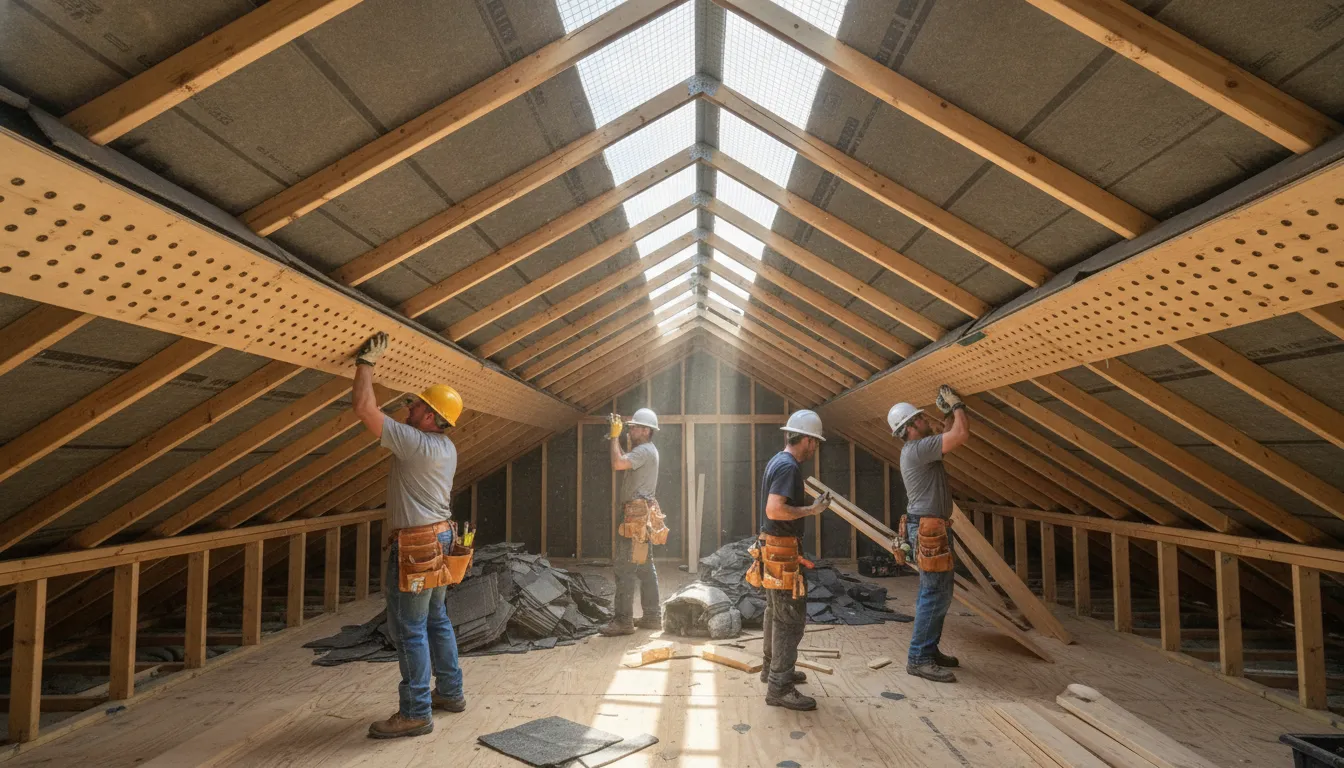
How heat and moisture affect the roof system
Heat and moisture are the two concerns most often associated with roof ventilation. On sunny days, the roof surface absorbs heat and the attic can become much warmer than the living space. Ventilation can help move heated attic air outdoors, but insulation and air sealing still play central roles in indoor comfort.
Moisture can enter an attic from outdoor air, roof leaks, plumbing issues, or indoor air escaping through ceiling gaps. Bath fans and other exhaust ducts that terminate in the attic can add moisture. When humid air contacts a cooler surface, condensation can form. Persistent moisture may contribute to staining, musty odors, damp insulation, or deterioration of wood and metal components.
Ventilation is not a leak repair
Staining on roof decking or rafters deserves investigation, but it does not prove that ventilation is deficient. The source could be a flashing failure, an old leak, condensation, or another issue. A qualified inspection should trace the pattern and review the roof exterior. The roof leak repair guide covers common leak clues and next steps. Treating the wrong cause can waste money while the actual problem continues.
Why Bay Area microclimates matter
A home exposed to frequent coastal fog may present different moisture patterns than one experiencing hotter inland afternoons. Shade, wind exposure, tree cover, roof orientation, and seasonal use of heating or cooling can also influence what a contractor observes. These factors do not automatically dictate a particular vent type. They help explain why neighboring homes with similar roof coverings may require different recommendations after inspection.
Review what to expect during a professional roof inspection
What signs suggest your ventilation needs inspection?
You do not need to climb onto the roof to identify reasons for a professional evaluation. The following signs warrant attention, especially before a roof replacement. Each can have more than one cause, so treat this list as a prompt for inspection rather than a diagnosis.
- Musty attic odors. A persistent damp smell can signal elevated moisture, a leak, or poor air movement.
- Condensation or damp surfaces. Visible droplets, damp fasteners, or wet insulation should be investigated promptly.
- Dark staining on decking or framing. Stains may reflect current or past moisture.
- Blocked or painted-over soffit openings. Exterior vents may be obstructed by paint, debris, insulation, or renovation work.
- Bathroom ducts ending in the attic. Moisture-producing fans should be checked for proper routing to the exterior.
- Unusually hot attic conditions or upper rooms. Heat alone does not prove a vent problem, but it supports a broader assessment.
Inspect safely
Attics can contain exposed wiring, fragile ceiling surfaces, sharp fasteners, pests, and hazardous materials. Roof surfaces create fall risks. Homeowners should limit their role to observations from safe, accessible areas and leave detailed attic and roof inspection to qualified professionals.
Document observations before the estimate
Homeowners can help the inspection by noting when odors, stains, or uncomfortable upper rooms are most noticeable. Take photos only from a safe location and record whether a symptom appears after rain, during hot afternoons, or in colder weather. Share any history of additions, insulation work, roof repairs, or bathroom renovations. That context helps the contractor distinguish a persistent pattern from an isolated event.
Why review ventilation during a roof replacement?
A roof replacement is one of the best times to evaluate ventilation because contractors can inspect materials and details that are difficult to see otherwise. Once old roofing is removed, damaged decking, abandoned openings, poorly integrated vents, and other conditions may become apparent. The team can coordinate new vent components with underlayment, flashing, and roof coverings instead of cutting into a finished roof later.
The evaluation should start before installation. During planning, ask the contractor to inspect accessible attic areas and the roof exterior. They should identify current intake and exhaust and note divided spaces or unusual geometry. The proposed scope should state which vents remain, which are removed, and how new components connect to clear airflow paths. Consult the roof replacement guide for a broader view of project planning.
Coordinate the complete roofing scope
Vent changes affect more than the vent product itself. Exhaust openings must be correctly located and weatherproofed. Intake work may involve soffits, baffles, or other details. Obsolete penetrations may need closure and deck repair. Golden Heights Remodeling can discuss these considerations as part of a broader roofing project consultation.
Clarify allowances and discoveries
Some attic and decking conditions remain hidden until work begins. Before signing a proposal, ask how the contractor handles concealed damage, obsolete openings, or adjustments to the planned ventilation path. The written scope should explain which work is included and how changes will be communicated. Homeowners comparing proposals may also find the roof replacement cost factors guide useful.
What should you ask your roofing contractor?
Clear questions help homeowners compare proposals and understand whether ventilation was evaluated as a system. Use this checklist during estimates and scope reviews.
- Where does intake air enter today? Ask the contractor to identify the openings and confirm that the path is clear.
- Where does exhaust air leave? Request an explanation of the current exhaust type and its placement.
- Are any vent types competing? Find out whether existing components should be removed, retained, or modified.
- What did you observe in the attic? Discuss insulation, air sealing, stains, ducts, and divided spaces.
- How will penetrations be flashed? Vent products must be integrated into the roof covering to resist water intrusion.
- How will the scope coordinate with insulation and exhaust ducts? Clarify responsibilities if other specialists are needed.
- How will discoveries and changes be documented? Confirm who communicates updates and approves changes.
Look for explanations, not product pitches
A strong proposal connects recommendations to observed conditions. The contractor should explain why a vent type suits your roof, how intake and exhaust will work together, and what limitations remain. Be cautious when someone recommends a powered fan or another product without first assessing intake, attic separation, and air leakage. When comparing contractors, use this guide to hiring a roofing contractor as a practical reference.
How does roof ventilation fit into a broader renovation?
Renovations can change the way air, heat, and moisture move through a house. New insulation may unintentionally cover intake openings. Air-sealing work can reduce uncontrolled leakage, but it may also reveal that planned ventilation paths need adjustment. Bathroom additions require properly routed exhaust ducts. Attic conversions can change a vented attic into a different roof assembly that calls for specialized design.
Coordination is important when roofing, HVAC, insulation, electrical, and interior work overlap. Each trade sees only part of the system unless the project team intentionally shares information. Before work begins, identify who is responsible for attic observations, duct terminations, intake protection, vent installation, and final verification. Golden Heights Remodeling’s design and planning services help coordinate decisions across a larger renovation.
Do not treat ventilation as a standalone cure
Installing new vents without correcting a roof leak, disconnected bath duct, or major ceiling air leaks may not solve the underlying concern. Adding insulation without preserving a designed air channel can reduce airflow. A thoughtful renovation sequence addresses sources first, then coordinates the roof, attic, and living-space boundaries.
Frequently asked questions about roof ventilation
Does every roof need ventilation?
Many homes use a vented attic or roof assembly, but not every roof is designed the same way. A contractor should identify the existing design and applicable requirements before recommending changes.
Can roof ventilation prevent all moisture problems?
No. Ventilation can support moisture management, but it cannot repair leaks or replace proper bath-fan ducting, insulation, and air sealing.
Is a powered attic fan better than passive vents?
Not automatically. A powered fan needs adequate intake and can interact with other vents or air leaks. Its suitability depends on the house.
Should ventilation be replaced with the roof?
Roof replacement is an ideal time to inspect and update ventilation, but the exact scope depends on existing conditions. Ask the contractor to document why each retained, removed, or new component fits the planned airflow path.
Plan your roof project with the full system in mind
Roof ventilation works best when it is coordinated with the roof covering, attic layout, insulation, air sealing, and moisture sources. Golden Heights Remodeling is a licensed, bonded, and insured California general contractor, License #1068868, serving Bay Area homeowners. If you are planning a roof replacement, use the opportunity to have the complete assembly evaluated rather than treating vents as isolated accessories.
Request a roof-project consultation with Golden Heights Remodeling