
A home can look polished today yet become frustrating when a knee injury, a stroller, visiting parents, or changing vision alters daily routines. Planning a universal design home remodel Bay Area homeowners can enjoy for decades means coordinating the whole property now, rather than making disconnected emergency changes later.
Schedule your free consultation to start planning a universal design remodel
A successful universal design remodel combines step-free access, generous circulation, adaptable kitchens and bathrooms, layered lighting, and flexible main-level spaces. The goal is not a clinical-looking home. It is a refined, easy-to-use home that supports children, guests, caregivers, and residents through changing life stages.
This guide focuses on coordinated whole-home planning. It complements detailed bathroom accessibility guidance while helping you prioritize entrances, living areas, utilities, and future-ready layouts as one integrated project.
Why plan a universal design home remodel Bay Area-wide?
Whole-home universal design aligns entrances, circulation, rooms, lighting, and utilities so each improvement supports the next. Planning them together can reduce rework, protect a consistent design language, and create a home that remains comfortable when household needs change.
Universal design makes spaces usable by a broad range of people without requiring separate, specialized-looking features. Aging in place is a related goal focused on remaining safely and comfortably at home over time. A coordinated remodel can serve both goals while still feeling tailored, contemporary, and appropriate for a high-value Bay Area property.
Older Bay Area homes often include raised entries, narrow halls, split levels, and compact rooms. Addressing one obstacle at a time can create conflicts. A curbless shower, for example, works best when the route from a main-level bedroom is also wide, well-lit, and free of abrupt floor transitions.
Golden Heights Remodeling uses a design-build approach that connects planning and construction under one team. During design and planning, homeowners can review layouts and 3D visualizations before construction begins. That process is valuable when several rooms, structural conditions, and future needs must work together.
Set priorities before selecting finishes
Begin with the people and routines the home must support. Consider who enters with groceries, where an injured family member could sleep, whether a parent may visit for months, and which daily tasks involve reaching, bending, or climbing stairs. Then separate immediate requirements from features worth preparing for behind the walls.
A full-home remodel in the Bay Area is a major investment. Golden Heights Remodeling’s planning materials place many comprehensive projects in the $200,000 to $500,000-plus range, with scope and existing conditions driving the final budget. Early priorities help direct that investment toward durable improvements instead of late-stage changes.
Start with step-free entrances and clear circulation
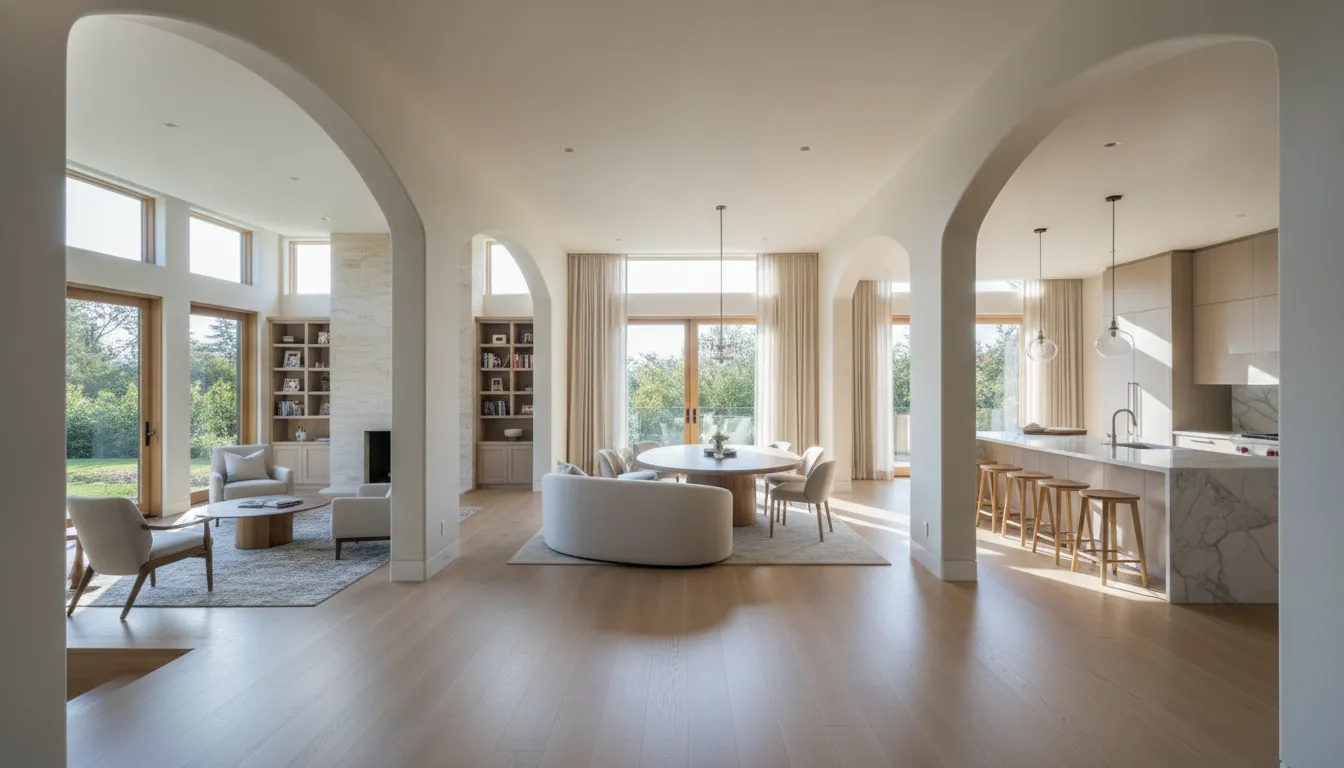
An accessible route begins outside the front door and continues through the rooms used every day. Step-free entry, weather-safe paths, wide openings, and flush floor transitions improve convenience now while preserving options for walkers, wheelchairs, strollers, and temporary injuries later.
At least one step-free entrance is a practical starting point. Depending on the lot, it may be integrated through a gently graded walkway, garage entry, or redesigned threshold. Drainage, waterproofing, exterior lighting, and slip resistance need to be considered together so the entry performs well during wet Bay Area winters.
Inside, evaluate the complete travel path rather than isolated doorway widths. Door placement, furniture zones, hallway turns, and flooring transitions all affect movement. A 36-inch door and 42- to 48-inch kitchen work aisles are useful planning benchmarks, but they are not automatic code requirements for every private residence. Your designer and local building department should confirm dimensions for the project’s scope and jurisdiction.
Details that make movement easier
- Use lever handles where round knobs would require a tight grip.
- Minimize raised thresholds between rooms and flooring materials.
- Provide stable, slip-resistant walking surfaces.
- Keep primary routes free of tight turns and protruding obstacles.
- Add lighting at entries, stairs, and changes in level.
If new doors or flooring are already part of the project, coordinate them with the windows and doors and flooring plans. That is usually more efficient than revisiting thresholds and clearances later.
How can a kitchen work for every life stage?
A universally designed kitchen combines generous work aisles, reachable storage, strong task lighting, and controls that do not require awkward reaching. It should support seated and standing tasks while retaining the cabinetry, materials, and visual quality expected in a custom Bay Area remodel.
The kitchen needs to work for several people at once. Clear paths between the sink, refrigerator, cooktop, and main preparation surfaces reduce collisions and make it easier for a family member using a mobility device to participate. An island should improve workflow without squeezing the route around it.
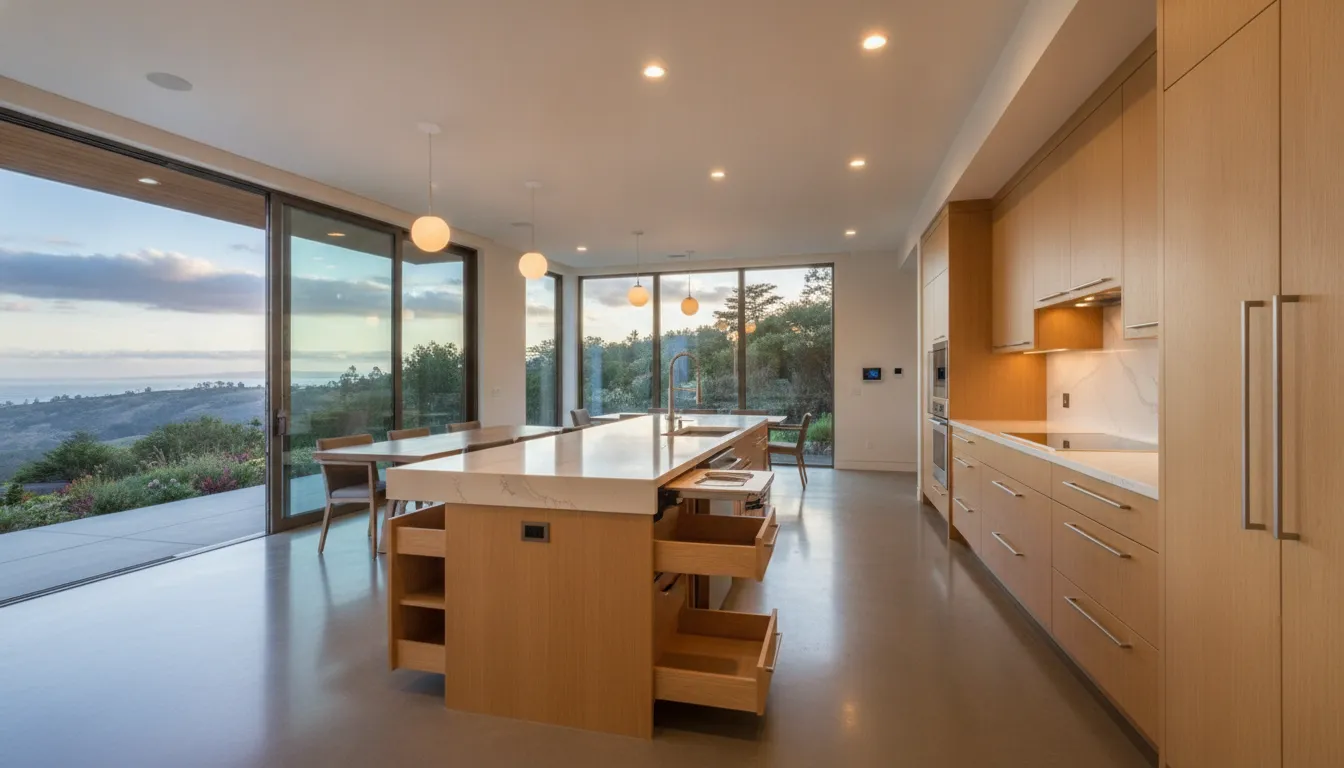
Storage deserves equal attention. Deep drawers, pull-out shelves, appliance lifts, and well-organized pantry zones bring frequently used items into comfortable reach. A lower work surface can serve someone seated, a child helping with dinner, or a homeowner who simply prefers to prep without standing for long periods.
Plan safety without sacrificing style
Layer ambient light with focused illumination at counters, the sink, and cooking surfaces. Use hardware that is easy to grasp and controls that are clearly visible. Front or side controls can reduce reaching across a hot surface, but appliance selection and household safety needs should guide the final decision.
These features can be integrated into a premium kitchen remodeling plan without announcing themselves as accessibility measures. Consistent cabinetry, concealed pull-outs, and carefully selected fixtures keep the room cohesive.
Design adaptable bathrooms before they are urgent
An adaptable bathroom provides comfortable circulation, a low-barrier bathing area, secure support locations, slip-resistant surfaces, and clear lighting. Installing structural backing and planning drainage during the remodel makes future adjustments easier without turning the bathroom into an institutional space.
Bathrooms concentrate water, hard surfaces, and tight movement into a small area. A curbless or low-threshold shower can remove a common obstacle, while a built-in bench and handheld shower fixture improve flexibility. The shower’s slope, waterproofing, and drain design must be resolved as a system, not treated as finish selections.
Install appropriate backing behind finished walls where grab bars may be useful now or later. This small construction-phase decision avoids opening tiled walls in the future. Contrast between floors, counters, fixtures, and wall surfaces can also help users recognize edges without requiring bright or clinical colors.
For deeper room-specific planning, see Golden Heights Remodeling’s guide to an accessible bathroom remodel. The whole-home strategy here keeps that bathroom connected to an easy route, an appropriate bedroom, and the other spaces used each day.
Which lighting and control choices improve daily use?
Useful lighting combines natural light, even ambient illumination, task lighting, and low-level nighttime guidance. Easy-to-operate switches, thermostats, outlets, and door hardware reduce strain. The best control plan includes simple manual operation even when smart-home features are added.
Good lighting supports safety, comfort, and the appearance of carefully selected finishes. Reduce harsh glare and deep shadows, especially at stairs, entries, counters, and bathroom floors. Multiple light sources allow the household to adjust for detailed tasks, entertaining, and nighttime movement.
Controls should be visible, intuitive, and placed where users can reach them comfortably. Rocker switches and lever handles are generally easier to operate than small toggles and round knobs. Smart controls may add convenience, but a reliable manual option keeps the home usable for guests and during technology failures.
The National Institute on Aging recommends improving lighting and reducing fall hazards as part of fall prevention at home. A remodel creates the opportunity to coordinate these practical changes with the electrical and finish plan.
Which layout choices keep a home future-ready?
A future-ready layout puts essential daily functions on one level, provides flexible rooms, and prepares utilities for later changes. A first-floor bedroom option, nearby full bathroom, reachable laundry, and clear paths can help a home adapt without a disruptive second remodel.
If the home has multiple levels, identify how someone could live primarily on the main floor. A flex room can serve as an office or guest room now and become a bedroom later. Pair it with access to a full bathroom and consider whether laundry can be located or prepared nearby.
Future preparation may be almost invisible. Plumbing rough-ins, electrical capacity, wall backing, and framing allowances can preserve options without installing every feature today. This is one reason a whole-home approach differs from a stand-alone bathroom update: utilities and room relationships are considered before walls close.
Plan around real Bay Area constraints
Lot slope, seismic requirements, structural walls, permits, and compact footprints can affect what is practical. California accessibility rules do not apply to every private residence in the same way they apply to public facilities. Avoid copying a commercial ADA checklist into a home plan. Instead, have the design-build team confirm applicable California Building Code provisions and local requirements for your address and project scope.
Golden Heights Remodeling’s full-home remodeling process connects structural modifications, permits, finishes, and multi-room construction. That coordination is especially important when improving circulation or relocating essential spaces.
Room-by-room universal design checklist
Use this checklist to identify barriers, rank near-term priorities, and flag low-cost preparations that are easiest during construction. Final selections should respond to the household, existing home, budget, and local requirements rather than following a generic accessibility template.
| Area | Plan now | Prepare for later |
|---|---|---|
| Entry and circulation | Step-free route, bright lighting, and flush transitions | Space for support or automated door hardware |
| Kitchen | Generous aisles, drawers, task lighting, and easy controls | Adaptable work area and appliance options |
| Bathroom | Low-barrier shower, slip-resistant floor, and clear lighting | Wall backing and flexible fixture locations |
| Bedroom and laundry | Main-level bedroom option and reachable laundry storage | Flexible room and utility preparation |
| Controls | Visible switches, lever hardware, and manual operation | Smart controls and added automation |
Walk through this list with every household member. Note which barriers affect daily life, which could matter after an injury, and which preparations are inexpensive only while walls or floors are open. The result becomes a practical briefing document for the design team.
How should you plan the remodel with a design-build team?
Start with household goals, an existing-condition assessment, and a ranked scope. Then test circulation and room relationships during design, verify local requirements, establish the budget, and coordinate construction sequencing. This process turns universal design goals into a cohesive, buildable plan.
- Document routines and barriers. Identify difficult entries, tight turns, poor lighting, and rooms that may need to change use.
- Rank needs and preparations. Separate immediate improvements from behind-the-wall work that preserves future options.
- Assess existing conditions. Review structure, utilities, drainage, floor levels, and permitting implications before finalizing layouts.
- Test the complete route. Confirm how people move from parking and entries to kitchens, bathrooms, bedrooms, and outdoor spaces.
- Coordinate selections and construction. Align fixtures, flooring, cabinets, lighting, and controls with the approved plan.
A design-build team can evaluate tradeoffs before work begins. It can also help avoid a common mistake: spending heavily on a visible feature while leaving a nearby doorway, route, or utility condition that limits its usefulness.
Talk with Golden Heights Remodeling about a coordinated whole-home plan
Frequently asked questions
What is the difference between universal design and aging in place?
Universal design aims to make a home comfortable and usable for a broad range of people. Aging in place focuses on supporting residents as they grow older. A remodel can address both by improving everyday convenience now and preserving options for changing mobility, vision, strength, or caregiving needs.
Does a private Bay Area home remodel have to follow ADA standards?
Not automatically. The Americans with Disabilities Act primarily governs public accommodations and other covered facilities. Requirements for a private residence depend on the property, jurisdiction, and project scope. Your design-build team and local building department should confirm which California and local code provisions apply.
When should universal design decisions be made?
Make them during early planning, before layouts, utilities, and finish elevations are fixed. Door locations, floor levels, shower drainage, wall backing, lighting, and future utility preparation are easier to coordinate before construction than after finishes are installed.
Can universal design still look high-end?
Yes. Wide circulation, layered lighting, flush transitions, drawers, lever hardware, and adaptable spaces can be integrated into a custom design. Careful material selection and consistent detailing make the features feel intentional rather than institutional.
Is it necessary to remodel the entire home at once?
No. A whole-home plan can guide phased construction. The key is to establish the complete strategy first, so early work does not conflict with later improvements. Prioritize urgent barriers and include low-cost preparations when walls, floors, or utilities are already open.
Plan a Bay Area home that works for the long term
A universal design remodel is most effective when it feels like one thoughtful home, not a collection of reactive fixes. Golden Heights Remodeling can coordinate design, permitting, structural work, finishes, and construction to create a refined home that supports today’s routines and tomorrow’s possibilities.
Book your free consultation with Golden Heights Remodeling
Ready to talk about your kitchen?
Get a free, no-pressure design consultation. We'll walk through your goals, budget, and the upgrades with the best return for your home.