
Before your major renovation reaches demolition, ask whether an earthquake retrofit Bay Area assessment should shape the plan. The best time to answer seismic questions is before walls close and finishes go in, while the remodeling team can still coordinate access, structural review, permits, and sequencing. Not every remodel needs seismic work, but every substantial remodel is a practical opportunity to ask a qualified professional.
Schedule a remodeling consultation with Golden Heights Remodeling to discuss your renovation goals and the right questions to raise with qualified professionals.
The right starting point is not a do-it-yourself checklist or generic retrofit package. It is a licensed professional’s review of the specific home, its age, construction, condition, prior alterations, and planned renovation. A remodeler can coordinate access and sequencing, while the appropriate licensed professionals make structural determinations.
Earthquake retrofit Bay Area planning starts with the home
Bay Area houses vary widely. A hillside home, low-slung bungalow, and multistory house over a garage can present very different questions. Even two homes built in the same year may have different foundations, additions, or earlier repairs. Online advice should be treated as background information rather than a diagnosis.
A substantial remodel creates a useful planning window because the team is already documenting existing conditions and deciding what will be opened or replaced. When seismic concerns are raised early, the team can identify questions for an engineer and coordinate any recommended work with the renovation.
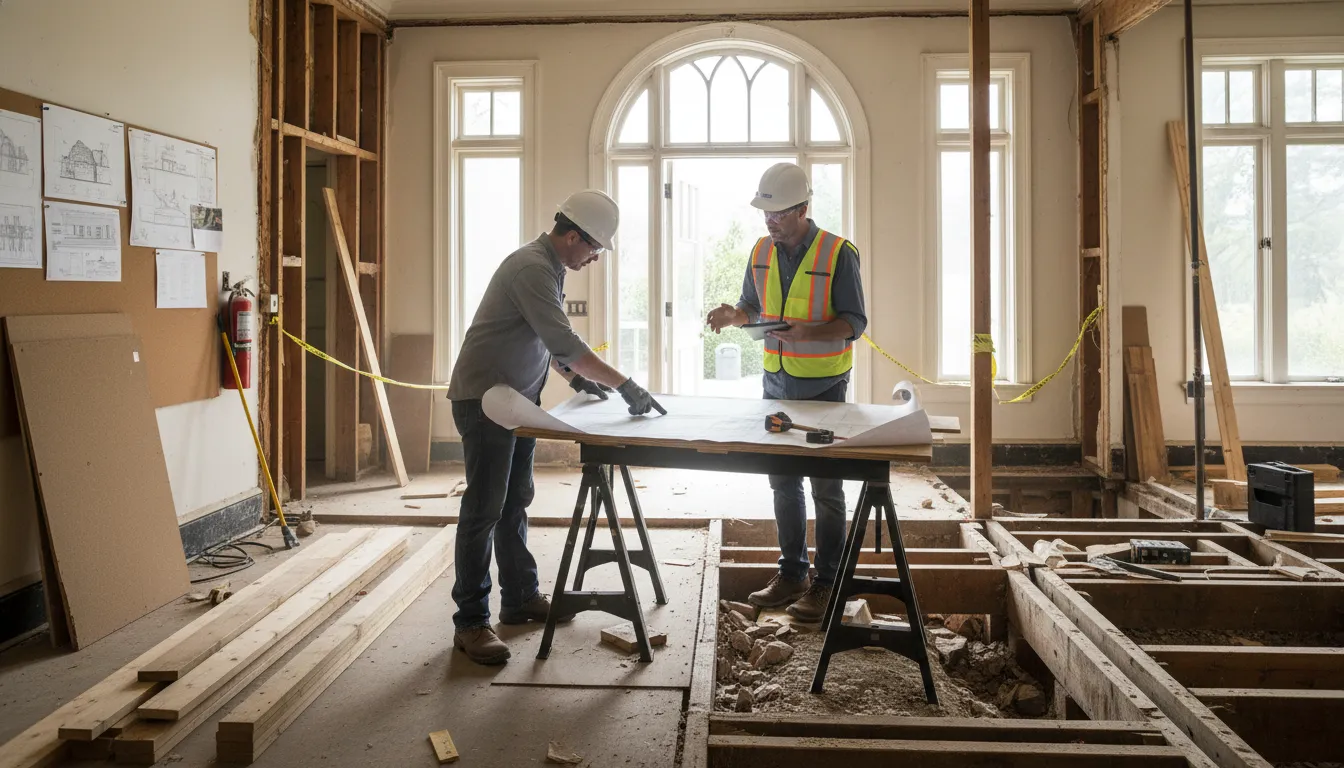
Why early coordination matters
Late discoveries can disrupt design decisions, budgets, finish orders, and inspection timing. Early coordination gives homeowners and professionals more time to evaluate options. It also keeps structural questions separate from cosmetic preferences, so safety-related decisions are not rushed after construction begins.
What a remodeling team can coordinate
A remodeling contractor can share the planned scope, document accessible conditions, and coordinate work with licensed design and engineering professionals. The contractor can explain how demolition, trade scheduling, and finish installation fit together. The team should never substitute assumptions for a property-specific assessment.
What signs should you discuss with a licensed professional?
Homeowners do not need to diagnose a seismic weakness. They can collect useful observations and bring them to a qualified professional. The following conditions are conversation starters, not proof that a particular retrofit is needed.
An older home with unclear alteration history
If records are incomplete or the house changed owners many times, it may be difficult to know what structural work occurred. Note known additions, garage conversions, wall removals, or earlier foundation projects. Share available plans, permits, invoices, and inspection reports.
Living space above a garage or another open area
Large openings at a lower level are often discussed during seismic evaluations. A professional can determine whether the configuration warrants further analysis. Do not assume that the presence of a garage alone establishes a problem or dictates a solution.
Short framed walls between the foundation and first floor
Some older homes have framed areas above the foundation that professionals may call cripple walls. Their configuration, materials, connections, and condition matter. A licensed assessment is the right way to understand their relevance for a specific house.
Visible foundation concerns or prior repairs
Cracks, moisture, settlement, patched areas, and previous repairs should be documented and discussed. They can have many causes, and a photo cannot establish the appropriate work. Golden Heights Remodeling’s foundation replacement and repair service offers a starting point for related construction discussions.
A remodel that changes loads or removes walls
Layout changes can trigger structural questions even when seismic work was not part of the original idea. Tell the design team about open-plan goals, additions, new openings, and heavy finish materials. The responsible professionals can identify what analysis is needed.
When does remodeling create a useful retrofit opportunity?
A remodel may create access to areas that are normally concealed, but access alone does not determine whether retrofit work is needed. The practical benefit is coordination. When walls, floors, or foundation-adjacent areas will already be exposed, professionals can plan observations before finishes are installed.
| Remodeling moment | Useful question to raise | Coordination benefit |
|---|---|---|
| Early design | Should a licensed structural assessment inform the scope? | Findings can be considered before plans and budgets are finalized. |
| Selective demolition | Which concealed areas should remain accessible for review? | Professionals can coordinate observations before reconstruction. |
| Foundation work | Do existing conditions affect the renovation plan? | Related construction can be sequenced with fewer conflicts. |
| Framing changes | What engineered details and inspections are required? | Approved details can be integrated with the framing schedule. |
| Before finishes | Have required inspections been completed? | The team can avoid covering work before required reviews. |
The best opportunity is often during design, not demolition. A preconstruction discussion can establish roles and identify dependencies. If a qualified professional recommends work, the team can evaluate how it fits with permits, inspections, materials, and homeowner priorities.
Which foundation and connection questions belong in the conversation?
Seismic discussions often involve the path that forces may take through a building and the connections between major parts of the structure. Homeowners do not need to select hardware or installation details. Instead, they should ask clear questions and assign decisions to qualified professionals.
Questions about the foundation
- What type of foundation does the house have, and what is its observed condition?
- Are there prior repairs, additions, or alterations that need closer review?
- Does planned renovation work affect access to foundation areas?
- Who is responsible for evaluating the foundation and documenting recommendations?
Questions about structural connections
- Which connections are relevant to the planned scope?
- Will any areas need to remain open for observation or inspection?
- How will engineered details be communicated to the construction team?
- What inspections must occur before work is covered?
Questions about open lower levels and framed walls
If the house includes living space over a garage, large lower-level openings, or short framed walls above the foundation, ask whether those conditions require evaluation. Avoid choosing a solution based on another home’s project. The right approach depends on the actual structure and approved design.
Explore Golden Heights Remodeling’s design and planning process to see how early project coordination can support a major renovation.
How should homeowners coordinate retrofit planning with a remodel?
- Document the house and your goals. Gather plans, permits, inspection reports, and records of earlier work. Write down planned changes and concerns.
- Raise seismic questions during initial planning. Tell the remodeling team that you want to understand whether a qualified assessment should be included.
- Obtain the appropriate licensed assessment. Let qualified professionals evaluate the home and define any recommendations. Generic guidance cannot replace this step.
- Align scope, permits, budget, and schedule. Clarify who will prepare documents, obtain approvals, perform construction, and coordinate inspections.
- Confirm closeout before finishes conceal work. Make sure required observations, inspections, and documentation are complete before related areas are closed.
Clear responsibility is essential. Ask who makes structural decisions, who communicates approved details, and who tracks inspections. A coordinated plan reduces the chance that one trade assumes another party handled a critical requirement.
Why does qualified assessment matter before work begins?
Seismic performance cannot be determined from a home’s age or appearance alone. Construction type, site conditions, earlier alterations, material condition, connections, and local requirements may affect recommendations. A qualified assessment turns broad concerns into property-specific information.
It also supports better remodeling decisions. If approved structural work changes finishes, utilities, or built-ins, the design team can respond before those items are ordered. If access is needed, demolition can be planned rather than improvised.
Keep safety claims realistic
No remodel or retrofit should be described as making a home earthquake-proof. A qualified professional can explain the intent and limitations of recommended work. Ask what the work is designed to address, what remains outside the scope, and what future review may be appropriate.
Understand the approval process
Permit and inspection requirements vary with the jurisdiction and scope. The project team should identify applicable requirements and build them into the timeline. Structural work should use approved documents and required professional oversight.
How can early planning protect the renovation schedule?
Seismic evaluation and remodeling design should be treated as connected planning tracks. When one track changes, the team should review its effect on the other. For example, a professional recommendation may affect where utilities run, which walls remain accessible, or when inspections occur. Identifying those dependencies before ordering finishes can reduce avoidable rework.
Create a decision and responsibility log
Ask the project team to record open questions, the professional responsible for each answer, and the date that answer is needed. The log can include required documents, permit milestones, planned observation points, and areas that cannot be covered yet. Golden Heights Remodeling can coordinate renovation scheduling and communication while licensed professionals remain responsible for structural determinations.
Plan for findings without guessing at solutions
A responsible plan allows for uncertainty. Selective demolition may reveal conditions that could not be seen earlier. Homeowners should ask how findings will be documented, who will evaluate them, and how a scope change would be approved. This process is more useful than setting aside a generic retrofit allowance that is not tied to professional recommendations.
Coordinate selections with inspection milestones
Cabinetry, flooring, wall finishes, and built-ins can depend on the completion of concealed work. The team should identify which selections can proceed and which should wait. Golden Heights Remodeling’s Bay Area remodeling timeline guide provides broader context for renovation planning.
Before construction begins, request a clear communication pathway. Homeowners should know who receives an engineer’s details, who schedules required inspections, and who confirms that work may be covered. This does not eliminate surprises, but it makes the response to new information more orderly.
What should you bring to a remodeling consultation?
A productive consultation begins with context. Bring reliable information, even if the record is incomplete. Useful materials include original plans, permit history, inspection reports, engineering documents, photos from earlier projects, and invoices for foundation or structural work.
Also bring a clear description of your remodeling goals. Explain which rooms may change and whether walls, openings, additions, or foundation-adjacent work are involved. Review Golden Heights Remodeling’s full-home remodeling service before the conversation.
Prepare a short concern list
Write down observed conditions without interpreting them. Note where you saw cracking, movement, water intrusion, previous patches, or unusual framing. Include approximate dates and photos when available.
Ask how the team will collaborate
Ask which licensed professionals may be needed, how recommendations enter the plans, and who coordinates inspections. Also ask how potential findings could affect the schedule and how scope changes are documented.
Contact Golden Heights Remodeling before your plans are finalized to discuss your remodel, available records, and coordination priorities.
Frequently asked questions
Should every Bay Area remodel include an earthquake retrofit?
No. The need and appropriate scope depend on the specific home, existing conditions, planned renovation, and qualified professional assessment.
Can a contractor determine the right retrofit from photos?
Photos can document concerns, but they are not a substitute for the appropriate licensed evaluation and approved details.
Is it better to evaluate seismic concerns before demolition?
Early discussion is helpful because it can guide design, access, budgeting, and scheduling. A professional may still need observations after selective demolition.
Can retrofit work make a house earthquake-proof?
No responsible professional should promise that. Ask the qualified evaluator to explain the purpose, limits, and performance goals of recommended work.
Who should be involved in planning?
The team may include the homeowner, remodeling contractor, designer, structural engineer, jurisdiction, and specialty trades. Clarify responsibilities at the start.
Plan your remodel with the right questions
If your renovation may involve foundations, framing, major openings, or broad layout changes, bring seismic concerns into the conversation early. Golden Heights Remodeling can coordinate remodeling goals with the qualified assessments and planning your home requires.
Schedule a remodeling consultation to discuss your home, priorities, and next steps.
Ready to talk about your kitchen?
Get a free, no-pressure design consultation. We'll walk through your goals, budget, and the upgrades with the best return for your home.