
Restoring a century-old craftsman in Berkeley requires more than new paint and updated wiring. These legacy structures demand a precise balance between preserving original character and meeting modern safety codes. For homeowners in the East Bay, the process is a journey through local history and engineering.
Ready to start your historic home renovation in the Bay Area? Schedule your free consultation with Golden Heights Remodeling today and get expert guidance on permits, preservation, and budgets for your Victorian, Edwardian, or Craftsman home.
A historic home renovation bay area project blends old-world craftsmanship with modern safety standards to preserve architectural heritage. It requires navigating city regulations in San Francisco, Oakland, and Berkeley while protecting the defining features of Victorian houses, Edwardian residences, and Craftsman bungalows. Homeowners must address seismic retrofitting, updated electrical systems, and energy efficiency upgrades to bring century-old structures up to current building codes. Working with a design-build firm that specializes in historic properties ensures that every update respects the home’s original character while meeting modern safety requirements.
Planning such a project requires a clear vision and a design-build partner who knows the local landscape. You must manage hidden structural issues and strict preservation rules before you start your renovation journey.
Historic Home Renovation Bay Area: What Makes Historic Home Renovation in the Bay Area Unique?
Historic Bay Area homes require specialized renovation approaches because they combine century-old construction methods with strict seismic regulations. Victorian, Edwardian, and Craftsman properties each present distinct preservation challenges that standard remodeling contractors are not equipped to handle. Local review boards in San Francisco, Oakland, and Berkeley add oversight layers that scrutinize every exterior and structural change.
Owning a historic home in the San Francisco Bay Area is a point of pride. Whether it is a Victorian in the Oakland hills or a Craftsman in Berkeley, these homes tell a story. However, starting a renovation means facing hurdles you will not find in newer builds. You must balance the beauty of the past with the safety and comfort of the present day.
Legacy materials and old building methods
Many homes built over 100 years ago used methods that are now rare. It is common to find hand-sawn siding or even hand-forged square nails inside the walls. These legacy materials are key to the character of the house but can make simple repairs more complex. Modern tools often do not fit old dimensions, so you may need custom work to match the original look.
The interior of these homes also poses a challenge. You will likely deal with lath-and-plaster walls instead of drywall. Plaster is thick and heavy, but it cracks easily during a remodel. You might also find knob-and-tube wiring or lead pipes that do not meet current codes. Swapping these out while keeping the original trim and molding intact requires a high level of skill.
Structural needs and modern codes
One of the biggest tasks in a local renovation is the structural overhaul. Modern building codes focus on safety and performance in ways that did not exist a century ago. Projects must meet strict requirements for fire safety, energy use, and hazardous materials. In our region, seismic retrofitting is a vital part of this work to protect the home from earthquakes.
Working in hilly areas like the East Bay adds another layer of difficulty. The soil in the Berkeley and Oakland hills can shift over time, often leading to foundation issues that you must fix before any cosmetic work begins. A solid foundation is the only way to ensure your historic home stays safe for the next 100 years.
Preserving character in a modern world
The goal of any historic project is to keep the soul of the home alive. This means finding a way to add modern systems or open floor plans without losing the classic feel. It is a delicate act that requires deep knowledge of local history and building science. You want a home that feels like a piece of history but functions like a new build.
What Are the Historic Preservation Guidelines and Permit Requirements?
Historic home renovations in the Bay Area must comply with the Secretary of the Interior’s Standards for Rehabilitation and local review board requirements. The State Historic Preservation Office (SHPO) oversees changes to character-defining features, while local boards in San Francisco, Oakland, and Berkeley control exterior modifications. Early coordination with code officials helps balance preservation goals with seismic safety and energy code requirements.
Renovating a historic property requires more than skilled craft. You must follow a strict set of rules to keep the home’s character while making it safe for today. The Secretary of the Interior’s Standards for Rehabilitation provide a clear path for this work. These guidelines help you decide what to save and what you can change to fit your modern life.
Federal and state standards
The core goal of these standards is to protect the parts of a building that give it its historic look. Before you start, you must identify these key features so you know what to keep. Working with the State Historic Preservation Office (SHPO) early in the process helps you meet these rules. This step is vital if you want to use federal tax credits for your project. A clear plan ensures your renovation follows the law and stays true to the home’s past.
Building codes also play a big role in your plans. Even old homes must meet current rules for fire safety, energy use, and health. You must balance these safety codes with the need to keep historic details. Early talks with code officials can help you find ways to meet safety goals without losing the home’s character.
Local review boards in San Francisco, Oakland, and Berkeley
Local boards add another layer of review. Groups such as the San Francisco Planning Department, the Oakland Landmarks Preservation Advisory Board, and the Berkeley Landmarks Preservation Commission look at how your changes affect the neighborhood. They examine everything from the type of wood siding to the shape of new windows. These boards want to ensure your project stays on track by avoiding late design changes that violate preservation standards.
Seismic safety and structural compliance
For homes in the East Bay hills, structural safety is a top concern. Seismic retrofitting is often required to protect the home from earthquakes. This work is complex because you have to conceal new steel or wood reinforcement behind historic walls. You may also need to repair old foundations or stabilize the soil on sloped sites. Addressing these requirements early prevents cost overruns and ensures the structure is sound for future generations.
Preserving Original Architectural Features While Modernizing
The most successful historic renovations preserve the defining architectural features that give each home its character: Craftsman woodwork. Victorian ornamentation, and Edwardian millwork, while integrating modern systems behind the scenes. Custom millwork matching, careful paint stripping, and period-appropriate material sourcing are essential techniques for maintaining authenticity during structural upgrades.
Saving an old home in the Bay Area takes a careful approach. You have to blend past style with what a modern family needs. This job involves a renovation that merges new ideas with true period style. We focus on keeping the details that make these homes special while adding the technology and comfort you want today. Our goal is to ensure every update feels like it has always been there.
We work in areas like the Berkeley hills and Oakland to bring these spaces back to life. It is not just about a fresh coat of paint. We examine the bones of the house and the small details that give it soul. Whether it is a grand front door or a simple floorboard, we treat each piece with care. This approach creates a home that is both fresh and connected to its roots.
Craftsman woodwork
Craftsman homes in the East Bay hills are known for their warm wood detailing. These homes often feature wide trim and built-in shelves made from oak or fir. When we start a remodel, we look for ways to save the original wood. If the wood is too damaged to repair, we fabricate new pieces that match the originals in every detail. This includes custom wood entry stairs, handrails, and baseboards that feel both strong and timeless.
- Stripping old paint to reveal the natural wood grain.
- Repairing built-in sideboards and bookcases to preserve the room’s original character.
- Using the same species of wood to patch areas where the structure has settled.
- Restoring original hardwood floors rather than replacing with new materials.
- Replicating hand-carved newel posts and balusters for staircases.
In many homes, the wood has been hidden for years under layers of paint. We strip these layers to reveal the craftsmanship underneath. We also study how the original builders joined the wood together. Preserving these construction details honors the skill of the people who built the house more than a century ago.
Victorian ornamentation
Victorian homes in San Francisco and Oakland are known for their ornate style. These houses often have tall rooms with deep trim and ceiling medallions. Following the standards for rehabilitating historic buildings ensures these features are preserved. We often work with decorative trim and marble fireplace surrounds to keep the rooms feeling rich and classic.
Many Victorians also have large doors and unique windows. We restore custom eight-foot doors and transom windows to let light flow through the home. These details provide a link to the past while we update the parts you cannot see. We ensure new plumbing and electrical work does not damage the plaster or the carved marble mantels that define the space. This preserves the grandeur of the home while making it safe and functional for today.
Edwardian millwork
Edwardian homes offer a bridge between the ornate Victorian era and the simpler Craftsman style. These homes often feature ten-foot ceilings and beautiful fir floors. We focus on preserving the long-grain fir boards that are so common in these Bay Area gems. If the floors are too thin, we source reclaimed wood to fill the gaps, maintaining consistency across the entire house.
The wood trim in an Edwardian home is often simpler than Victorian but still essential to the character. We see many homes with high wainscoting in the dining room and plate rails in the halls. Our team works to preserve these features while we open up kitchens or add new suites. By keeping the original trim, we ensure the home stays true to its past.
Modernizing Plumbing, Electrical, and Structural Systems
Updating a historic home’s mechanical systems requires replacing knob-and-tube wiring, galvanized steel plumbing, and outdated HVAC while preserving lath-and-plaster walls and original trim. Modernization typically involves whole-house rewiring, copper or PEX repiping, seismic bracing, and energy efficiency improvements, all concealed behind historic surfaces to maintain the home’s original appearance and character.
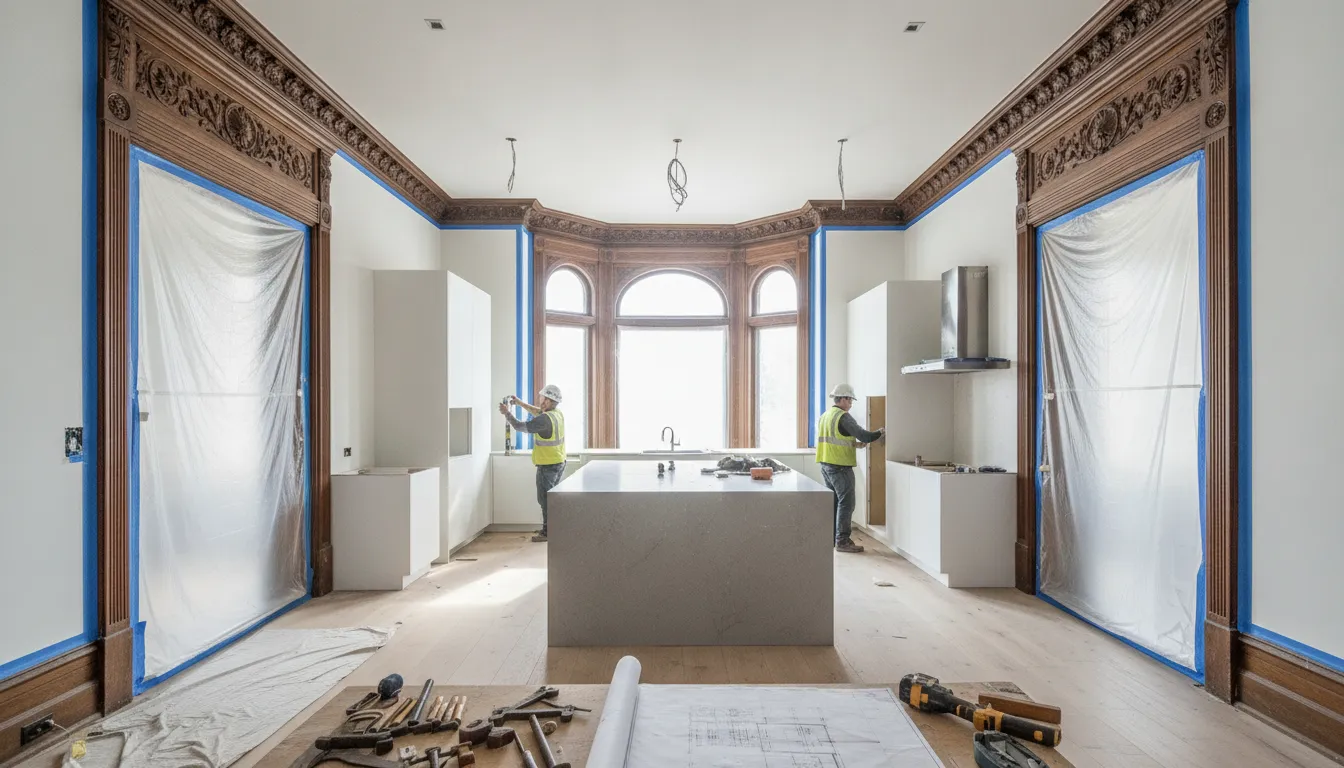
Older homes in the East Bay often have outdated systems that do not meet today’s safety standards. When you undertake a renovation, you must look deep behind the walls. This work involves much more than fixing a leak or a broken light switch. You need to bring the entire house up to modern building codes while keeping its classic appearance. This balance is the heart of any quality local project.
The goal is to provide modern comfort without losing the charm that makes these houses special. We focus on the parts you do not see, like wiring and plumbing. These systems must be robust enough for today’s lifestyle. In towns like Orinda and Berkeley, homeowners want high-end technology inside their historic frames. Doing this correctly takes skill and careful planning from the start.
Updating wiring and plumbing systems
Many homes built a century ago still use knob-and-tube wiring or old lead pipes. These materials are not safe for today’s power demands or clean water requirements. Replacing them is a major part of the job. Century-old homes typically need full system upgrades to prevent fire and water damage. We must find ways to run new lines through tight spaces in the walls, keeping the original plaster and trim intact.
We use tools to map the home’s interior framework before we cut, allowing us to thread new wires and pipes with minimal disruption. For plumbing, we replace galvanized steel with copper or PEX, improving water pressure and flow throughout the home. For electrical, we install new panels and grounded outlets so the home can handle modern appliances and technology. We do all of this while keeping the home’s historic character intact.
Seismic and structural upgrades
Safety is the highest priority for any Bay Area homeowner. Seismic retrofitting is a critical step for any older building in our region. This process connects the wood frame of the home to its concrete foundation, helping the house remain stable during an earthquake. Modern codes also address fire safety and life-safety systems to ensure your family is protected in an emergency.
Structural work often includes reinforcing existing beams or adding steel supports. Many older homes have foundations that have shifted over time. We level the house and install new supports where they are needed most. Early coordination with local building officials helps you meet these strict requirements. A strong frame allows these historic gems to stand tall for another century.
Improving home energy efficiency
Older houses often lack adequate insulation, making them hard to keep warm in winter or cool in summer. Modern codes set high standards for energy performance. Adding spray foam or mineral wool insulation to attic and crawl spaces blocks air leaks and maintains a steady indoor temperature year-round.
Updating the HVAC system also makes a significant difference. We install high-efficiency units that use less power and fit into compact spaces. Vents can often be concealed in locations that do not disturb the home’s visual character. These upgrades lower your monthly utility bills and reduce your carbon footprint.
Why Is Seismic Retrofitting Critical for Historic Bay Area Homes?
Most Bay Area homes built before 1940 lack the structural reinforcements needed to withstand earthquakes. Seismic retrofitting: bolting the frame to the foundation, adding plywood shear walls, and reinforcing cripple walls, is essential for protecting both the structure and its historic fabric. Local ordinances in San Francisco, Oakland, and Berkeley often mandate these upgrades during major renovations.
Living in the San Francisco Bay Area means preparing for seismic activity. For owners of historic properties, earthquake safety is a top concern during any renovation project. Most homes built before 1940 were not designed to resist modern earthquake forces. These structures often lack the strong connections between the frame and the foundation that keep a building upright during a quake. Seismic retrofitting is now a vital component of preserving these legacy buildings for future generations.
Common structural risks in older homes
Historic homes in Oakland and Berkeley often have short cripple walls in the crawl space. These walls sit on the concrete foundation. In older construction, these walls lack plywood bracing, making them weak. During an earthquake, these walls can fail, causing the house to slide off its base. Homes built on sloped lots or with unreinforced masonry foundations face even higher risks. Identifying these vulnerabilities is the first step in any historic renovation project.
For a deeper look at whole-house structural planning, explore our full home remodeling services and how design-build delivery streamlines complex structural scopes.
Proven retrofit techniques
Modern seismic work uses three primary methods to strengthen a home.
- Bolt the house frame to the concrete foundation using steel anchor bolts and plates, creating a continuous load path from roof to ground.
- Add plywood shear panels to brace the cripple walls, forming a rigid box that resists lateral movement during earthquakes.
- Install steel moment frames at large openings like garage doors to maintain structural continuity across the ground floor.
These techniques allow the home to move as a single unit without racking or collapsing.
Preserving historic fabric during retrofits
The biggest challenge in a seismic retrofit is preserving the historic fabric of the home. We must conceal new steel and plywood behind lath and plaster or original wood siding. This requires exceptional skill to ensure structural repairs do not compromise the appearance of a Victorian or Craftsman home. Local regulations in San Francisco, Oakland, and Berkeley often require these upgrades during major remodels. By planning ahead, you can meet safety codes while protecting the look of your historic home.
How to Choose the Right Historic Renovation Contractor
Selecting a contractor for a historic renovation requires verifying specialized experience with period construction methods, local preservation board procedures, and design-build delivery. The ideal partner can demonstrate a portfolio of Victorian, Edwardian. Or Craftsman projects in your specific Bay Area community and maintain strong relationships with local planning departments and landmark commissions.
Choosing a team for your project takes more than checking for a license. You need a partner who understands how to treat an older home with care. Look for a firm that can identify character-defining features to preserve. Identifying these elements early helps you decide what to keep and what to change for modern life. A knowledgeable team will recognize which features give the home its soul and which are simply outdated.
Look for focused historic experience
Historic projects often use building materials that newer construction crews rarely encounter. Your team should know how to source and work with period-appropriate materials. This applies equally to a Victorian in San Francisco and a Craftsman in the East Bay hills. Ask to see a portfolio of past work in your specific city. You want to see homes that look and feel as they did when new but function well today. A team with deep local roots will have the right tools and skills for the job. Reviewing our project portfolio can give you a sense of the craftsmanship and attention to detail that historic renovations demand.
Key takeaway: A design-build approach eliminates gaps between planning and execution, which is especially valuable when hidden structural issues are discovered mid-project. Learn more about the value of integrated design and planning for complicated renovations.
Check for knowledge of local review boards
Local planning boards in cities like Berkeley and Oakland have strict rules for historic properties. A qualified contractor must understand the local review processes and preservation standards. They should have experience working with boards such as the Oakland Landmarks Preservation Advisory Board and the San Francisco Planning Department. This familiarity speeds up the approval process and prevents costly redesigns.
Verify insurance and credentials
Any contractor working on a historic property must carry proper insurance and licensing. Verify that their coverage protects both your home and the original materials inside it. Ask about their track record with homes built before 1900. A contractor who regularly works with older structures will carry the right insurance and know how to manage the risks of unexpected discoveries like asbestos or lead paint.
Planning Your Budget and Timeline for a Historic Home Renovation
Historic home renovation costs in the Bay Area range from $50 to $600 per square foot, with full restorations taking 12 to 24 months. Budget allocations should reserve 15 to 20 percent for unexpected structural discoveries. The timeline expands significantly when local preservation board approvals are needed before construction can begin.
A clear budget and realistic timeline are essential, especially for historic properties. The unpredictability of century-old construction means you need financial buffers and schedule flexibility.
| Renovation Scope | Cost per Square Foot | Typical Timeline |
|---|---|---|
| Structural and seismic retrofit only | $50 – $100 | 3 – 6 months |
| Full system replacement (electrical, plumbing, HVAC) | $100 – $200 | 4 – 8 months |
| Kitchen and bathroom modernization | $200 – $400 | 6 – 12 months |
| Full historic home renovation | $300 – $600 | 12 – 24 months |
Where your renovation dollars go
Understanding line-item costs helps you budget realistically. Structural and seismic work typically consumes 20 to 30 percent of the total budget in the Bay Area, given the region’s seismic requirements. System replacements (electrical, plumbing, HVAC) account for another 15 to 25 percent. Interior finishes and millwork restoration eat up 25 to 35 percent, and architectural fees, permits, and contingency reserves make up the remainder. If you are also updating your kitchen, see our guide to kitchen remodeling in the Bay Area for specific cost factors and design considerations.
Building a realistic timeline
Every phase of a historic project takes longer than a conventional renovation. Permit approval alone can take 8 to 16 weeks when a preservation board must review the plans. Material sourcing for period-appropriate replacements can add weeks to the schedule. Adding a 20 percent buffer absorbs delays from unexpected structural discoveries and custom millwork fabrication.
Frequently Asked Questions
How do I start a historic home renovation in the Bay Area?
Begin with a thorough inspection of the property’s structural condition, systems, and historic features. Identify which aspects of the home qualify as character-defining features under preservation guidelines. Then assemble a design-build team with specific experience in historic properties in your city. Early consultation with local preservation boards prevents expensive redesigns later.
Do I need special permits for a historic home renovation in the Bay Area?
Yes. Any exterior modification visible from the street typically requires review by the local landmarks board in San Francisco, Oakland, or Berkeley. Interior work involving structural changes or system replacements also requires standard building permits. Our FAQ page answers common questions about permitting timelines and what to expect during plan review.
What are the most common challenges when renovating a 100-year-old home?
The most frequent surprises include knob-and-tube wiring that must be fully replaced, outdated plumbing. Dry rot and termite damage in framing, and foundations that have settled or cracked over time. Uncovering these issues mid-project is normal. A 15 to 20 percent contingency in your budget is essential for managing these discoveries.
How do I modernize a Victorian home without losing its historic character?
Focus on keeping the striking visual features: exterior brackets and corbels, interior ceiling medallions, decorative fireplace surrounds, and tall baseboards. Conceal modern wiring and ductwork behind plaster walls and inside existing chases. Use period-appropriate light fixtures that provide modern illumination without visual dissonance. Choose paint colors from historic palettes that respect the home’s era.
What is the typical cost of a historic home renovation in the Bay Area?
Costs range from $50 to $600 per square foot depending on the scope of work. A structural-only retrofit runs $50 to $100 per square foot, while a full historic restoration with modern systems. Finishes, and preservation work lands between $300 and $600 per square foot. Early engagement with a design-build firm provides the most accurate estimate for your specific project.
Are you ready to schedule your historic home renovation?
Historic homes often have aging infrastructure that can lead to costly problems if not addressed promptly. By starting your renovation early, you protect both your investment and the architectural heritage of your Bay Area community.
Schedule your free consultation with Golden Heights Remodeling today. Our team specializes in historic home renovations across San Francisco, Oakland, Berkeley, Orinda, and the greater East Bay. We understand the unique challenges of Victorian, Edwardian, and Craftsman homes and guide you through every step from permit approvals to final finishes. Contact us to schedule your consultation and take the first step toward preserving your home’s legacy while making it your own.
Ready to talk about your kitchen?
Get a free, no-pressure design consultation. We'll walk through your goals, budget, and the upgrades with the best return for your home.