
A remodel is one of the best opportunities to prepare a home for an electric future. Walls are open, rooms are changing, and contractors can coordinate work that would be disruptive to complete later. Yet a successful home electrification remodel Bay Area project requires more than replacing a gas appliance with an electric model. It calls for a coordinated plan covering electrical capacity, equipment selection, ventilation, placement, utility requirements, and future goals.
The practical approach is to plan the home as one connected system. Decisions about an induction range can affect circuits and cabinetry. A heat pump can influence electrical load, outdoor equipment placement, and ductwork. Water heating, solar, batteries, and EV charging all compete for space and capacity. Addressing them together helps reduce rework and creates a remodel that supports both today’s needs and tomorrow’s options.
Start your home electrification remodel Bay Area plan early
Start electrification planning during early design, before layouts and permit drawings become difficult to change. A coordinated plan identifies the equipment the household wants now, future systems worth preparing for, and the construction details that connect them. This early work reduces surprises and keeps technical decisions aligned with the finished spaces.
Electrification planning should begin while the remodeling scope is still flexible. Waiting until construction begins can create avoidable conflicts. An appliance may need a dedicated circuit that was not included in the permit set. A heat pump water heater may need a different location, adequate air volume, or a condensate route. An EV charger may require a wiring path through newly finished areas.
Start by documenting what the household wants to change now and what it may want later. Current goals might include an induction cooktop, heat-pump heating and cooling, or a heat-pump water heater. Future goals may include rooftop solar, battery storage, a second EV, an accessory dwelling unit, or an electric outdoor kitchen. Even if those additions are years away, the remodel can preserve practical pathways for them.
Build a complete equipment list
Create a room-by-room list that includes every major electrical load. Record the intended appliance type, location, and available product specifications. Include heating and cooling equipment, water heating, cooking, laundry, EV charging, spa equipment, and other substantial loads. A preliminary list helps the designer and licensed electrician understand the combined scope.
Connect electrification to the broader remodel
Electrification is easier when it is integrated with a full-home remodeling plan. Golden Heights Remodeling’s design and planning process helps connect technical requirements with room layouts and finishes. Cabinet dimensions can accommodate an induction range. Mechanical spaces can be evaluated before layouts are finalized. Lighting, outlets, and controls can be coordinated with the electrical plan rather than treated as separate late-stage decisions.
Can your electrical service support the remodel?
A licensed electrician determines whether the existing electrical service can support the planned remodel by reviewing current and proposed loads, equipment specifications, panel configuration, and applicable requirements. The panel label alone cannot answer the question. The resulting evaluation should explain whether service work, different equipment, or approved load management is appropriate.
Electrical capacity is a foundational question, but the answer should not be guessed from the panel label alone. A licensed electrician should evaluate the existing service and complete the calculations required for the proposed design. The review should consider the current loads, new equipment, how equipment operates, and applicable local requirements.
Some homes may need panel or service work. Others may be able to support their goals with careful equipment selection or an approved load-management strategy. The appropriate solution is specific to the home and project. Ask the electrical professional to explain the assumptions, alternatives, and tradeoffs in plain language before the team commits to equipment.
Inspect more than the main panel
The assessment should consider the condition and configuration of the existing electrical system. That can include subpanels, available breaker spaces, grounding and bonding, existing circuits, wiring routes, and the location of utility equipment. Older homes may have constraints that only become visible during investigation or demolition.
Coordinate utility work early
If the project may require utility involvement, begin that conversation early. Utility review, equipment locations, trenching, clearances, and scheduling can affect the construction sequence. Requirements and timelines vary. The remodeling team and licensed electrician should confirm the current process for the specific address rather than relying on assumptions from another project.
Coordinate appliances, HVAC, and water heating
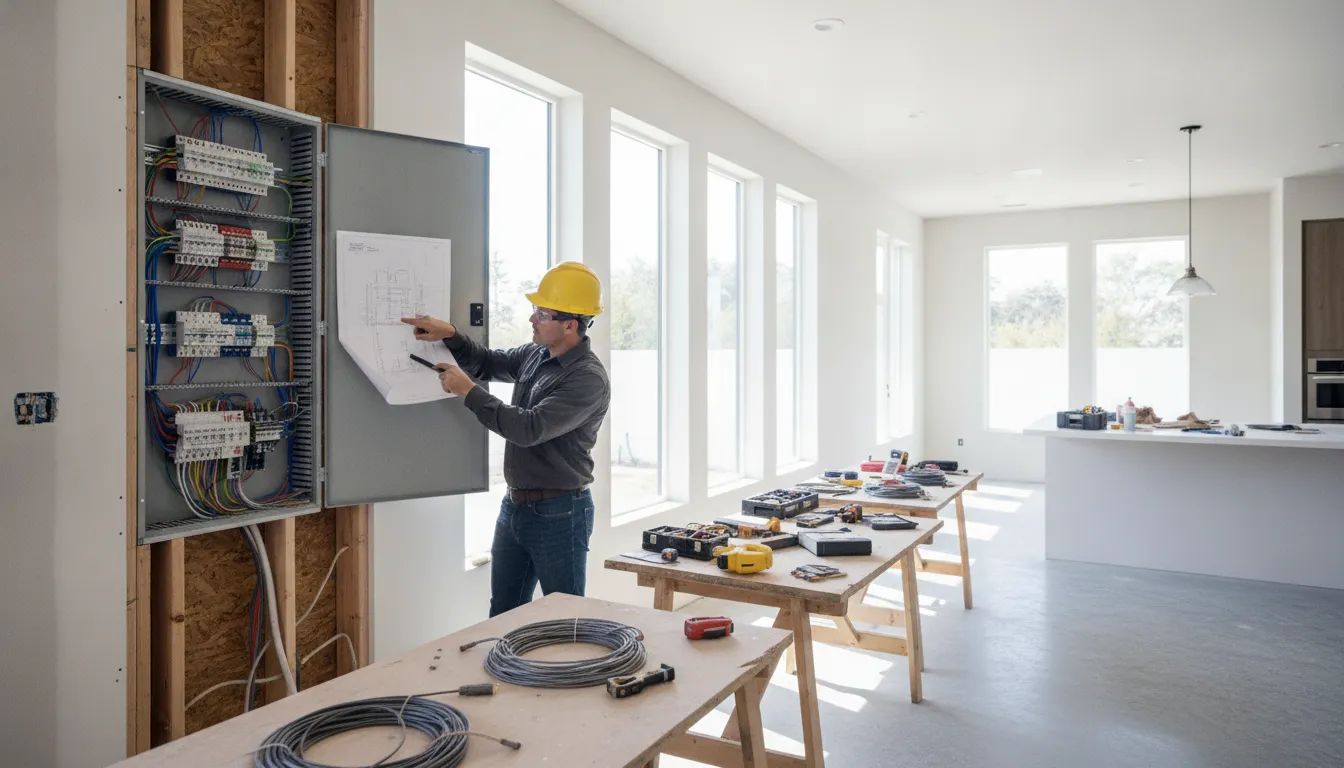
Coordinate major electric systems as a group because every selection affects electrical capacity, physical space, and construction details. An actual product specification is more useful than a generic placeholder. Confirming equipment before rough-in allows cabinetry, ventilation, drainage, plumbing, controls, and electrical work to develop around one consistent plan.
| System | Planning questions | Remodel coordination |
|---|---|---|
| Induction cooking | What model and circuit does it require? | Confirm cabinet opening, countertop, ventilation, and circuit route. |
| Heat-pump HVAC | What system fits the home’s layout and loads? | Coordinate indoor and outdoor units, ducts or refrigerant lines, drainage, and controls. |
| Heat-pump water heater | Is the proposed location suitable? | Plan space, air needs, condensate routing, plumbing, and electrical connection. |
| Electric laundry | Which washer and dryer will be used? | Confirm power, venting or ventless design, plumbing, and clearances. |
| EV charging | What charging level and vehicle pattern are expected? | Evaluate panel capacity, parking location, cable reach, and pathway. |
Cooking and kitchen planning
An induction range or cooktop affects more than the electrical plan. The team should verify dimensions, power requirements, ventilation, clearances, and countertop or cabinet details. Select the appliance early enough for the kitchen remodeling designer and electrician to coordinate around the actual specifications.
Heating and cooling
Heat-pump HVAC design should reflect the home’s conditions and remodeling scope. Insulation, air sealing, windows and doors, room layouts, and additions can all influence the design. Qualified professionals should determine the appropriate system and installation details. The remodeling team then coordinates equipment placement and pathways with architecture and finishes.
Water heating
A heat-pump water heater has different planning considerations from a conventional unit. Location, available space, air movement, sound, drainage, plumbing, and electrical service all deserve review. Evaluate those factors before assuming the existing water-heater location will remain the best choice.
Plan now for solar, batteries, and EV charging
Future-ready planning preserves practical options without requiring a homeowner to install every system during the current remodel. The best approach identifies realistic future equipment zones and pathways while walls or exterior areas are accessible. Final measures should still be designed by qualified professionals for the property and current requirements.
A homeowner does not need to install every future system during the current remodel. However, thoughtful preparation can make later projects less disruptive. While walls, ceilings, or exterior areas are open, discuss future pathways and equipment zones with the design team and licensed electrician.
Future-ready work may include reserving appropriate panel space, identifying a possible battery location, or planning a practical route between the electrical service and parking area. The exact design must comply with current requirements and suit the property. Avoid installing speculative components without professional guidance, because technology and codes change.
Document future assumptions
At project completion, retain plans, permits, equipment specifications, photographs of concealed pathways, and panel schedules. Labeling and documentation can save time when a future contractor evaluates the home. Written records are more useful than relying on memory after finished surfaces conceal the work.
A practical electrification sequencing checklist
A reliable sequence moves from goals and existing-condition reviews to equipment selection, coordinated design, approvals, rough-in checks, and final documentation. Each stage gives the next team member better information. Following the sequence also creates checkpoints where homeowners can resolve conflicts before they are concealed behind finishes.
- Define current and future goals. List the systems to install now and possible additions later. Include household priorities, comfort concerns, and expected vehicle needs.
- Evaluate existing conditions. Have qualified professionals review electrical capacity, equipment locations, building conditions, and likely utility coordination.
- Select major equipment. Choose realistic products or performance criteria early enough to support design. Confirm final specifications before rough-in.
- Coordinate the design. Align electrical, mechanical, plumbing, cabinetry, ventilation, drainage, and finish details. Resolve conflicts on drawings whenever possible.
- Confirm permits and utility steps. Requirements differ by jurisdiction and project. Verify the current process and identify any approvals that affect ordering or scheduling.
- Complete and inspect rough-in work. Check circuit locations, pathways, blocking, penetrations, and equipment zones before walls close.
- Commission and document systems. Confirm operation, collect manuals and permits, photograph concealed work, and keep final plans for future projects.
How should you handle codes, permits, and incentives?
Handle codes, permits, and incentives as address-specific items that require current verification. Requirements and programs can vary by jurisdiction, utility territory, building type, and scope. Confirm the applicable process with the project team and responsible agencies, and never make purchasing decisions based on an incentive that has not been verified.
Bay Area requirements can vary by city, county, utility territory, building type, and project scope. California energy standards and local rules may influence the design, but homeowners should not rely on a general article as a code determination. The project team should confirm the requirements that apply to the specific address and permit application.
Permit planning belongs in the project schedule. Electrical, mechanical, plumbing, and building work may require coordinated documents and inspections. Product substitutions can also affect approved plans. Before changing major equipment, ask whether revised documentation or approval is needed.
Verify incentive details before making decisions
Electrification incentives may be offered by federal, state, regional, local, or utility programs. Availability, eligibility, equipment requirements, and application steps can change. Some programs may require action before purchase or installation. Homeowners should verify current terms directly with the program administrator and avoid assuming that a project will qualify.
Keep organized records, including product specifications, invoices, permits, and installation documentation. These records can help with incentive applications, warranties, maintenance, and future resale. Treat any anticipated incentive as unconfirmed until eligibility and process requirements have been verified.
Common planning mistakes to avoid
The most costly planning mistakes happen when connected systems are treated separately or important selections arrive after rough-in. A coordinated team can identify competing demands for space, capacity, and pathways earlier. Homeowners should also distinguish sensible future preparation from speculative work that lacks a verified need.
Treating each system as a separate project
Separate decisions can create competing demands for capacity and space. Review the complete plan before finalizing individual systems.
Selecting equipment after rough-in
Late selections can change circuit, ventilation, plumbing, and dimensional requirements. Use final specifications before closing walls whenever possible.
Ignoring future pathways
A small amount of planning during a remodel may prevent major finish disruption later. Discuss realistic future goals, but avoid overbuilding based on unsupported assumptions.
Depending on unverified incentives
Programs change. Verify eligibility, deadlines, and application sequencing directly with the responsible organization before including an incentive in the budget.
Frequently asked questions
Do I need to replace my electrical panel?
Not always. A licensed electrician should evaluate the existing service and planned loads. Depending on the home, the right plan may involve panel work, a service upgrade, equipment choices, or an approved load-management approach.
When should electrification planning begin?
Begin during early scope and design. Early planning allows the team to coordinate circuits, equipment, pathways, utility steps, and permits before construction decisions become expensive to change.
Can I prepare for solar or EV charging without installing it now?
Yes. The team can evaluate future pathways, panel considerations, and potential equipment locations while the remodel is open. Ask qualified professionals to design and document any future-ready measures.
Are electrification rebates available?
Programs may be available, but terms and eligibility change. Verify the current requirements with the program administrator before purchase or installation, and retain complete project records.
Questions to bring to your remodel team
A productive planning meeting turns broad electrification goals into specific decisions about products, capacity, placement, pathways, and responsibilities. Bring a complete picture of the household’s current needs and realistic future plans. Ask the team to identify decisions with long lead times and choices that become costly after finishes are installed.
A productive planning meeting should turn broad electrification goals into specific decisions. Bring a list of current appliances and note which systems are likely to be replaced during the remodel. Share plans for additions, changing room uses, outdoor living areas, and vehicles. The more complete the picture, the easier it is for the team to identify connected work.
- Which electric systems are included now, and which are only future possibilities?
- Who will complete and explain the electrical load evaluation?
- Which major products must be selected before design or permitting?
- Could equipment placement affect cabinets, storage, acoustics, or outdoor space?
- Does the utility need to review any part of the proposed work?
- Which pathways should be photographed before walls and ceilings close?
- Who will collect final plans, specifications, permits, and commissioning records?
Ask the team to identify decisions with long lead times and those that are costly to change later. Electrical service planning, equipment locations, and utility coordination deserve early attention. Finish selections can then develop around a sound technical plan instead of forcing technical compromises.
Plan your Bay Area remodel as one connected project
A coordinated electrification plan connects electrical, mechanical, plumbing, layout, and finish choices before construction makes them harder to change. Golden Heights Remodeling brings these considerations into a broader renovation process, helping Bay Area homeowners move from early goals to a practical, documented construction plan.
A coordinated electrification plan can help homeowners avoid rework and make confident decisions while the home is already under construction. Golden Heights Remodeling can connect electrical, mechanical, plumbing, layout, and finish considerations within a broader renovation plan. Learn more about the company’s licensed, bonded, and insured remodeling team.
Schedule a consultation to discuss how electrification goals can fit into your Bay Area remodel.
Ready to talk about your kitchen?
Get a free, no-pressure design consultation. We'll walk through your goals, budget, and the upgrades with the best return for your home.