
A renovation should not force you to discover the most important layout decision after demolition begins. For Bay Area homeowners planning a kitchen, bathroom, addition, ADU, or full-home update, 3D design for home remodeling turns a broad vision into choices you can see and evaluate before construction starts.
View Golden Heights Remodeling’s 3D design portfolio to see how renovation ideas can be previewed before building begins.
3D visualization gives homeowners a clear view of a proposed renovation before work begins. It helps you compare layouts, examine movement through the room, coordinate visible materials, and clarify important scope choices with a design-build team. Golden Heights Remodeling provides this planning support for homeowners across the Bay Area.
How does 3D design for home remodeling help homeowners?
Short answer: A 3D model makes a planned remodel easier to understand. Instead of interpreting flat lines alone, you can see spatial relationships, discuss options with your project team, and make informed selections before construction is underway.
A two-dimensional plan remains important for dimensions and construction documentation. A three-dimensional view serves a different purpose: it makes the planned experience of the space easier to discuss. For example, a homeowner can assess whether a kitchen island appears comfortable beside an appliance wall. Whether a vanity placement supports a clear bath entry, or whether a new opening improves the connection between two rooms.
Golden Heights Remodeling integrates custom visualization within a design-build process. Planning and construction remain connected under one remodeling relationship, so design conversations can stay focused on the space that will ultimately be built. This approach is especially useful for busy Bay Area homeowners who want an organized decision process before a crew enters the home.
What the model can communicate
- Cabinet, vanity, island, fixture, and built-in locations within the proposed room.
- Sight lines from nearby doors, seating areas, windows, or connected living spaces.
- General material relationships, including cabinetry, flooring, tile, counters, and hardware.
- Daily movement through high-use areas such as a kitchen work zone or bathroom entry.
- Design questions that need refinement before the project reaches construction.
A shared visual reference
Visualization gives homeowners, designers, and construction professionals one shared reference for a conversation. Everyone can discuss a specific visual plan rather than relying on separate assumptions. That shared view does not replace approved drawings, product details, or written scope. It supports those project documents by helping homeowners understand what they are reviewing and what questions still need answers.
What can you preview before renovation construction starts?
The value of remodeling design visualization is not only seeing a beautiful completed room. It is using that preview to assess how a room should function and feel before you commit to an approach. A useful review focuses on the decisions that matter during daily life in the finished home.
What should you preview in a kitchen layout?
In a kitchen remodel, the model can help you compare an island with another layout, evaluate cabinet placement, and discuss pathways between cooking, cleaning, storage, and seating areas. You can check how a tall cabinet run may affect the view from an adjacent room. You can also consider whether lighting, counter edges, backsplash surfaces, and cabinetry feel coordinated in the full setting.
These are not small details when the kitchen is a central gathering area. A proposed layout needs to support routines such as food preparation, family traffic, guests seated at an island, and access to major appliances. Seeing those relationships early gives the design conversation a practical focus.
What should you preview in bathrooms, additions, ADUs, and whole-home remodels?
For a bathroom, a homeowner can evaluate the intended position of a vanity, shower, tub, storage, lighting, and door movement. For an addition, the model can show how the new room connects visually to the existing home. With an ADU, it may help clarify compact circulation, kitchen placement, storage, and natural light choices.
Whole-home remodeling often requires consistent design decisions across rooms. Reviewing materials and focal views together can help avoid a collection of choices that look disconnected when installed. Golden Heights Remodeling’s home remodeling design services can guide these choices as part of a coordinated renovation plan.
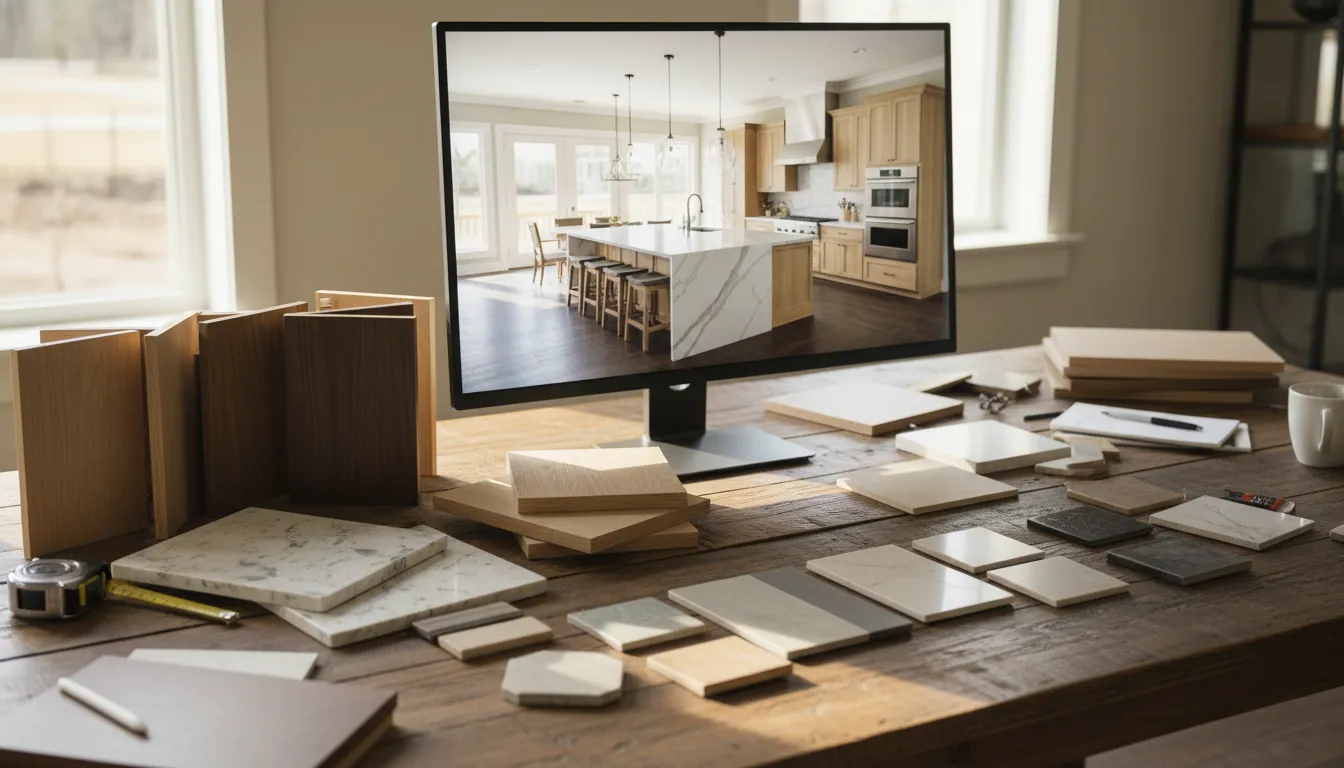
Which decisions should you review in a model?
| Remodel area | What to preview | A helpful review question |
|---|---|---|
| Kitchen | Island, cabinetry, appliance zones, lighting | Does the planned flow suit how we cook and gather? |
| Bathroom | Vanity, shower entry, storage, tile relationships | Does the room feel comfortable and easy to use? |
| Addition | Transitions, windows, sight lines, furnishing scale | Does new space connect naturally to the home? |
| ADU | Compact layout, kitchen, storage, daylight | Are essential functions clear within the footprint? |
| Whole home | Materials, circulation, recurring visual details | Do the updated rooms feel intentionally connected? |
How does remodeling design visualization clarify material choices?
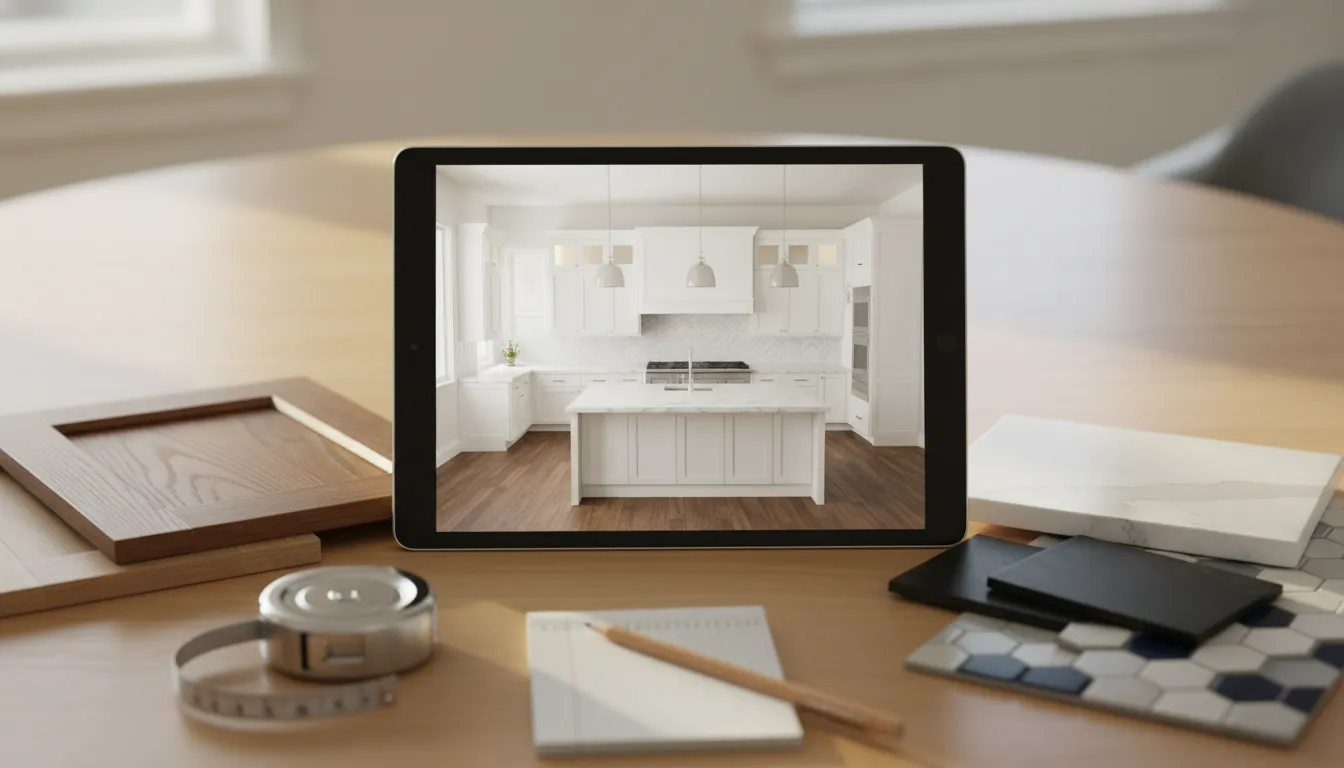
Homeowners frequently select materials from small samples, inspiration photos, and individual product pages. Those references are useful, but they do not always show how several visible choices will relate within your proposed layout. A 3D design review can bring those elements into one visual conversation.
View combinations before final selections
Consider a kitchen with painted cabinetry, a wood-toned island, quartz counters, tile backsplash, flooring, pendant lighting, and hardware. Each selection may be appealing on its own. The important question is whether the combination supports the look and function you want in the planned room. A visualization can help you compare options before final approvals and material ordering.
The same principle applies to bathrooms. Tile scale, vanity finish, mirror placement, lighting, hardware, shower glass, and floor tone all affect the finished impression. A homeowner may quickly see that one combination feels too busy, too dark, or less practical than expected. Revising that direction during planning is usually easier than questioning it after installation starts.
What should a rendering confirm?
A rendering is an excellent visual planning tool, but it is not a substitute for physical samples, manufacturer specifications, approved documents, or a written scope. Colors and textures can appear different on a screen and under actual home lighting. Product availability and final project cost also depend on selected materials and confirmed scope.
A thoughtful review uses both tools: the model helps narrow and align the design direction, then physical samples and project documentation help confirm the final selections. This keeps the process clear without overstating what a rendering alone can guarantee.
To explore how planning becomes a practical remodeling roadmap, visit Golden Heights Remodeling’s design and planning resource.
Can 3D planning help reduce avoidable change orders?
Some construction changes cannot be predicted in advance. Existing conditions discovered after walls or floors are opened can affect a renovation plan. Yet other changes begin with a design choice that was unclear, delayed, or not fully discussed before construction started. A visual design review helps move many of those conversations earlier.
How can you identify design conflicts early?
A homeowner might see that an island crowds a walking path, storage conflicts with a doorway, or a finish transition looks less cohesive than expected. A design-build team can then discuss adjustments during planning and record the approved direction. That is more constructive than waiting until the same concern appears on an active jobsite.
Use a simple pre-construction review sequence
- Review the proposed layout. Look at the arrangement of rooms, cabinets, fixtures, doors, openings, and circulation paths.
- Compare important options. Evaluate layout variations or visible material combinations that affect daily use and design direction.
- Flag questions clearly. Note concerns about clearance, storage, lighting, appliance placement, tile transitions, or views into adjacent spaces.
- Confirm selected direction. Match agreed choices with written scope, product details, and any additional drawings required.
- Carry decisions into construction planning. Keep the approved visual direction aligned with documents used to prepare the build.
This is where a unified design-build relationship provides value. The design conversation is connected to the construction plan, not treated as a separate creative exercise. Homeowners can learn more about Golden Heights Remodeling’s approach through its remodeling services.
Where does 3D design fit in the design-build process?
3D visualization is most helpful when it is part of a deliberate planning process. Golden Heights Remodeling’s design-build model connects early goals, layout development, visual review, material selection, scope confirmation, and construction preparation under one relationship.
1. Discuss the way you want the home to work
The process begins with the problems and goals driving the remodel. You may need more storage, a kitchen that serves gathering and cooking. A bathroom that is easier to use, an ADU that uses space intelligently, or a more cohesive full-home layout. Discussing priorities first prevents the rendering from becoming only an attractive picture.
2. Explore a visual concept
With your objectives understood, a model can show how a proposed concept might solve those needs. Homeowners can evaluate how spaces connect, what features become focal points, and whether storage and movement support real routines. The design team can then use feedback to refine the proposal.
3. Compare layout and finish directions
At this stage, the model helps the conversation become specific. You can compare an island orientation, cabinet arrangement, vanity placement, tile approach, or material combination. Keep track of approved decisions and questions that require a sample, specification, or further drawing review.
4. How do you confirm the direction before construction?
Once the design direction is aligned with scope and selections, the team can prepare for construction with a clearer shared understanding. A visual model does not remove every construction variable. It helps make the homeowner’s selected design direction visible before work begins.
Schedule a consultation with Golden Heights Remodeling to discuss your Bay Area remodel and how 3D visualization can support planning before construction.
What should you bring to a 3D remodeling consultation?
A good consultation is easier when the design team understands what you need, what you prefer, and what has frustrated you about the existing space. You do not need to arrive with every choice made. Bring enough information to begin a focused conversation.
Prepare goals, inspiration, and practical needs
- A short list of your top functional needs and optional wish-list items.
- Photos of the existing room and features that affect the planned work.
- Inspiration images with notes about the layout, material, storage, or lighting you like.
- Known appliance, fixture, accessibility, entertaining, or household-use needs.
- Questions about options, revisions, material review, scope, and next steps.
If more than one household member uses the room differently, gather input before the meeting. A primary cook, frequent host, multigenerational household, or homeowner planning for long-term use may notice different priorities. These conversations help ensure the design preview reflects daily life, not just appearance.
Questions to ask during a visual review
- Which parts of the proposed layout are shown in this visualization?
- Which dimensions, selections, and features require separate written confirmation?
- Can we compare an alternate arrangement for a key design choice?
- How will selected materials be reviewed with physical samples?
- How do the approved design decisions carry into construction planning?
Before meeting, viewing the 3D design portfolio can help you identify rooms, finishes, or design moves that speak to your goals. Bringing those examples to a discussion can make your feedback more precise.
Talk with Golden Heights Remodeling about your 3D design review and make key layout and finish choices before construction starts.
Frequently asked questions about 3D design for home remodeling
Is 3D design useful for a kitchen or bathroom remodel?
Yes. A 3D design review can help you understand layout, cabinet or vanity placement, clearances, sight lines, and the relationship between visible finishes before construction. It is particularly useful in kitchens and bathrooms where storage, fixtures, lighting, and everyday movement all matter.
Can a 3D model prevent every change order?
No. A model cannot predict all site conditions or discoveries made during construction. It can help homeowners and the project team identify design questions sooner, compare key options earlier, and clearly document approved layout and material directions before the build begins.
Does a rendering replace samples or project documents?
No. A rendering supports visual planning, while physical samples, specifications, drawings, proposals, and written scope confirm the details of a renovation. Use the visual model to choose and refine a direction, then confirm selected products and scope with your remodeling team.
How can I visualize a Bay Area remodel before construction?
Begin with a professional design consultation that connects your goals to layout and selection options. Golden Heights Remodeling offers custom 3D design visualization within its design-build process. It helps Bay Area homeowners review a planned renovation before construction begins.
Preview your Bay Area remodel with confidence.
When you can see the proposed space before construction, you can ask clearer questions and make decisions with better context. Golden Heights Remodeling combines planning, custom 3D visualization, and construction services to help Bay Area homeowners prepare for a coordinated renovation.
Schedule a consultation to start planning your remodel with a team that can help you visualize the project before construction begins.