
Adding a custom ADU can boost your property value by up to 35 percent in Contra Costa. Homeowners in Walnut Creek and Orinda use these versatile spaces for family or rental income. Today’s design trends focus on high-end finishes and smart floor plans.
ADU design trends Contra Costa homeowners are following focus on using small footprints with high-end materials and green tech today to build luxury spaces. In 2023, over 26,900 accessory dwelling units were approved in California as said by Fine Group RE. Modern projects often include all-electric systems, smart home features, and large glass doors to create a seamless indoor-outdoor flow that helps a small home feel larger. Local zoning rules often allow for units up to 1,200 square feet and 16 feet in height, giving you room for a guest house. Choosing a design-build approach (CA License #1068868) ensures your home handles unique hilly terrain while increasing property market values by as much as 35 percent.
Schedule your free design consultation to explore how these ADU design trends can work for your Contra Costa property.
Understanding the latest styles is the first step in planning your project. Modern designs make small spaces feel much larger by using Open Floor Plans with Defined Zones. This approach creates flow while giving each area a clear purpose, and here is how this trend works.
Adu Design Trends Contra Costa: Open Floor Plans with Defined Zones
Modern ADU design trends in Contra Costa focus on making small spaces feel large and open. Most detached units in towns like Orinda and Danville are now built with open floor plans. These layouts remove walls between the kitchen, living room, and dining area. By doing so, the home feels more spacious. This approach is key when designing a modern detached ADU where land is limited.
Zoning through furniture and lighting
Homeowners often worry that an open plan will feel like one big, messy room. You can avoid this by using defined zones. Instead of walls, you use rugs or couches to mark off different areas. For example, a large rug can show where the living room ends and the dining area starts. Lighting also plays a big role. You might use bright lights in the kitchen but soft, warm lamps in the lounge. This helps the brain see each spot as its own room.
Using color and texture
Color contrast and different materials help split the floor plan without blocking the view. You can paint a feature wall in the living area a soft blue while keeping the kitchen white. Different floors, like tile for the kitchen and wood for the living area, also work well. These subtle changes keep the flow of the home while giving each zone a clear job. In places like Walnut Creek, these small details make a big impact on how you live in the home.
Visualizing with 3D design
It can be hard to plan an open layout on paper. You might find it tough to see how your furniture will fit or if the zones will work. To help, we use modern 3D design visualization. This tool lets you walk through your ADU before we even start to build. You can see how the light hits the floor and check if the zones feel right. Using ADU design and planning process tools ensures your new home fits your life perfectly. This step is vital since studies from the Terner Center at UC Berkeley show that smart design is the main way to get the most out of small homes.
City-by-City Comparison
Each Contra Costa town has unique ADU design priorities. The table below highlights key differences across the three main communities we serve.
| Feature | Walnut Creek | Danville | Orinda |
|---|---|---|---|
| Terrain type | Gently sloping | Flat valley floor | Steep hillsides |
| Key design focus | View corridors | Architectural compatibility | Foundation engineering |
| Permit complexity | Moderate | Design review required | High (soil + drainage) |
| Indoor-outdoor potential | Patios and decks | Large backyards | Hillside decks with views |
Indoor-Outdoor Living for Contra Costa Homes
One of the top ADU design trends Contra Costa homeowners favor for 2025 is the blend of indoor and outdoor spaces. Modern designs no longer treat the yard as a separate zone but as a direct extension of the living room. By using large glass sliders and folding patio doors, you can make a small floor plan feel much larger. Our custom ADU design services help you pick the right layout to link these areas.
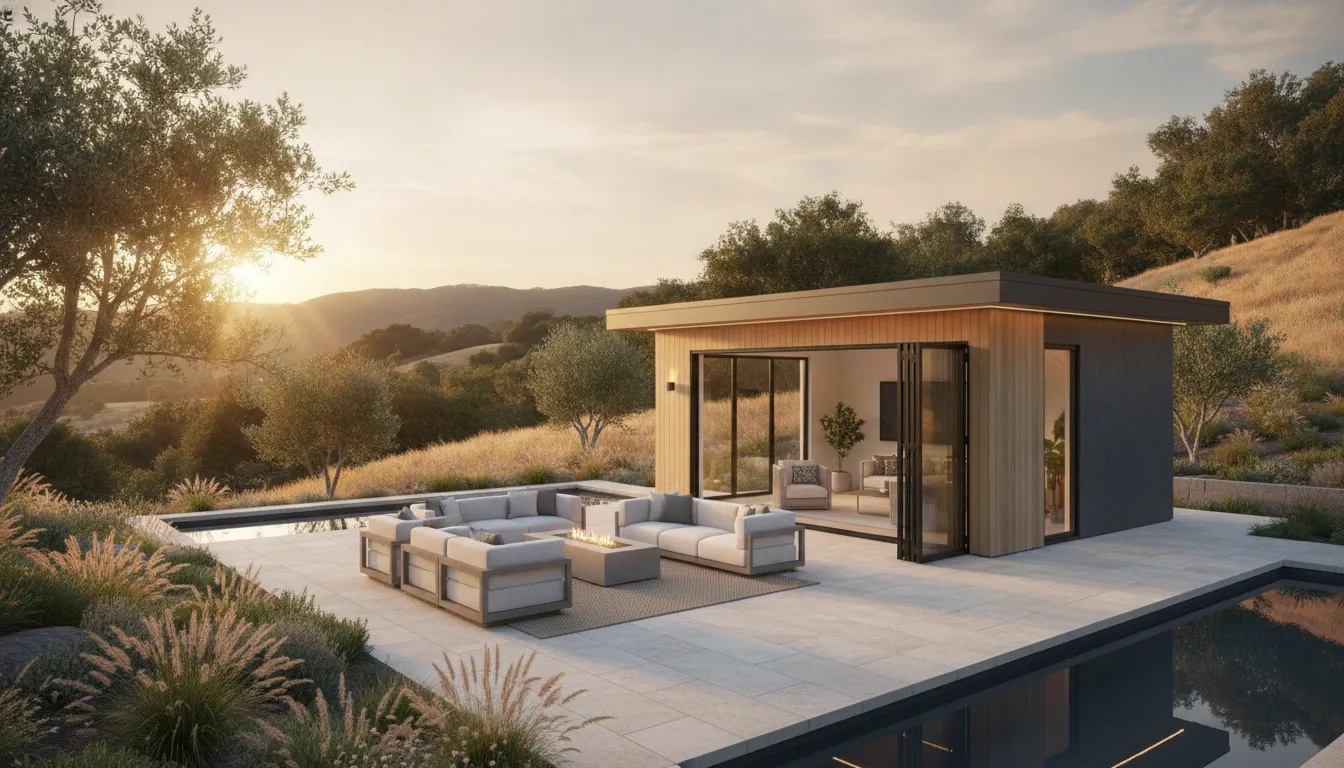
Glass Door Options for Seamless Flow
The choice of door style is the main way to create an indoor-outdoor flow. Bi-fold doors are popular because they fold back like an accordion to open the whole wall. Large sliding glass doors are another good choice for tight spaces where a swinging door might hit furniture. French doors offer a classic look but may not give the same wide opening as modern folding systems. These glass walls let in natural light and offer clear views of the yard.
In many Bay Area cities, more people are building these units to solve housing needs. According to the UC Berkeley Terner Center, ADU permits in California grew from about 6,000 to nearly 16,000 in just one year. This growth shows how important smart design is for small homes. A well-placed door can turn a small patio into a primary dining area.
Hillside Design and View Corridors
Properties in the Orinda hills, Berkeley hills, and Oakland hills often have steep slopes. These hills offer great views but need expert care during construction. Building a deck or patio on a slope needs deep knowledge of soil stabilization and foundation engineering. We focus on these technical needs to ensure your outdoor space is safe and level. Remodeling a hillside home in Concord or the surrounding East Bay requires a design-build team experienced with drainage and view preservation. Landscaping and drainage must also be part of the plan to prevent water issues on the hillside.
Maximizing a view corridor is a key part of hillside ADU design. This involves placing windows and decks to frame the best vistas while keeping privacy from neighbors. For homes in Walnut Creek or Danville, this might mean a raised deck that looks out over the valley. Our team uses 3D design tools to show you exactly how the views will look from your new deck before we start building.
Covered Spaces for Year-Round Use
Adding a roof or pergola over your deck makes it useful in any weather. A covered patio stays cool in the summer and dry during winter rains. You can add heaters, fans, and lighting to make the outdoor room feel like a true part of the home. These features help you get the most out of your property every month of the year. It also adds value to the home for future renters or family members.
Research shows that a well-designed unit can boost property value by 25% to 35% in urban areas. This makes a custom ADU a strong investment for your family. By focusing on indoor-outdoor living, you create a space that feels high-end and spacious. This design style fits the active, nature-focused life that many Contra Costa families love.
Why Are Sustainable and All-Electric ADUs the Top Choice in Contra Costa?
Green building is now a key part of ADU design trends in Contra Costa. Many homeowners in towns like Orinda and Walnut Creek now choose all-electric systems. This shift helps the planet and saves money on power bills over time. Modern units use smart tech to track energy use and keep the home cozy in any weather.
Smart systems and tech
Most new ADUs now skip gas lines. They use high-tech heat pumps for both heating and cooling. These systems are quiet and take up very little space. Induction stoves are also common because they are safe and fast. These tools work well with solar panels, which many local roofs now carry to meet state rules.
Good windows and insulation are also vital for 2025 builds. You need tight seals to keep heat out in the summer and in during the winter. This focus on the “home shell” makes the living space more pleasant. It also means you spend less on monthly costs. High-end builds often add smart fans that move air based on the time of day.
Permit growth and state laws
State laws have made it much easier to build these green homes. New rules like AB 2221 and SB 897 have cut through red tape for many people. These laws help speed up the time it takes to get a build started. In 2023, more than 26,900 ADUs were approved in the state. This shows that more people are using these laws to grow their homes. You can check local ADU permit rules to see how these laws apply to your yard.
Growth is not slowing down. Experts look for a 10 percent jump in new builds for 2025. This surge is due to a high need for more housing across the San Francisco Bay Area. A study shows that California housing units could grow by nearly 1.5 million through ADU projects. This makes them a top choice for people who want to add value to their land.
Building in Contra Costa County
Each town has its own rules for how big an ADU can be. In most parts of Contra Costa, you can build up to 1,200 square feet. The height limit is usually set at 16 feet. These rules keep the new home from blocking views for you or your neighbors. If you live on a hill in Lafayette or Danville, you may need special plans for your base and soil. Our ADU design-build team can help you handle these local rules and manage the permits from start to finish.
- Heat pumps for year-round air control
- Induction cooktops for safe meal prep
- Solar-ready roof layouts for clean power
- Dense insulation to lower noise and cost
A good design-build team can help you handle these local rules. They will manage the permits from the start to the final check. This saves you from the stress of dealing with city hall on your own. It also ensures your new all-electric ADU meets every safety code and lasts for many years to come.
Designing for Multigenerational Living and Rental Income
Modern ADU design trends in Contra Costa show a big shift toward flexible living spaces. Many homeowners in towns like Orinda and Danville now build these units to house aging parents. They also build them for adult children who are moving back home. These “granny flats” or “in-law units” offer a way to keep families close while giving everyone their own space. This trend is a key part of how people now use their land in the Bay Area. Learn more about optimizing for income in our rental ADU complete guide.
Flexible Layouts for Family Needs
Designing for multigenerational use requires a focus on privacy and ease of use. A common trend is the use of separate entries. These allow each person to come and go without walking through the main house. Inside, small kitchens and private baths make the unit feel like a full home. Soundproofing between walls is also a key feature. It helps keep noise levels low for both the main house and the ADU.
Working through the ADU construction process with a design-build firm helps you plan for these small parts. We find that many families in Lafayette and Walnut Creek prefer plans that can change over time. A space meant for an aging parent today might become a home office later. It could also serve as a guest suite for friends. Having a flexible layout ensures the unit stays useful for decades.
Boosting Income and Property Value
Beyond housing family, ADUs are a top choice for those seeking rental income. High home values and rents across the region drive this trend. A well-built unit can use current land to provide a low-cost housing growth option in major areas. This approach helps meet the high demand for housing across California. It allows owners to turn part of their yard into a source of steady cash.
A thoughtfully designed ADU is also a smart move for your money. Research shows that a well-built unit can boost a property’s market value by 25% to 35% in urban areas. At Golden Heights Remodeling, our ADU projects often range from $80,000 to over $300,000. This range allows for high-end custom builds. These units match the style of your current home and the local neighborhood feel. For a deeper look at pricing, check our ADU cost Bay Area guide.
Key Features for Rental Success
If you plan to rent out your ADU, certain design choices make it more liked by tenants. Private outdoor spaces, like a small deck or patio, are very popular in Contra Costa County. They extend the living area and provide a sense of luxury. Using tough parts like quartz for counters is also a smart choice. High-quality floors help the unit stand up to years of use while still looking great.
Many owners also choose to add smart home tech for better care. Smart locks allow for easy access without keys. Smart thermostats help control energy costs and keep the space nice. These modern touches make the ADU feel more premium. They also help you get a higher rental rate and find better tenants. By focusing on these trends, you can create a space that serves your family and your bank account.
How Can Smart Home Features and Compact Luxury Transform Your ADU?
Modern ADU design trends in Contra Costa now blend high tech tools with high end style. You can have both a smart home and a luxury feel in a small floor plan. This mix makes life easy and adds real value to your land. For homeowners in Walnut Creek and Orinda, these trends represent the next step in small space living. You get the perks of a big house in a small, smart unit.
High Tech Systems for Small Spaces
Smart tools are no longer just for large homes. Most new units in Danville now use smart thermostats like Nest or Ecobee. These tools help you control heat and air from your phone. You can also add Lutron or Philips Hue systems to set the mood with light. These lights can dim or change color to make a small room feel cozy. Keyless entry tools like Schlage Encode or August locks are also very common. They let you give access to guests or renters without a physical key. This is great for units used for short stays.
Safety systems are another top choice for 2025 builds. You can watch your property through clear cameras even when you are far away. These smart systems save energy and keep your unit safe. They are a big part of modern ADU project budget and planning because they lower monthly costs. By using smart sensors, you can stop water leaks or fire before they cause big harm. These tools work together to make the unit run on its own.
Premium Finishes and 2025 Trends
Compact luxury means using the best items in a small space. For 2025, we see a shift toward natural looks. Homeowners in Walnut Creek choose white oak floors and clay wall finishes. Woven textures on light fixtures and rugs add a warm feel. Custom cabinets help you use every inch of space without making the room look crowded. These cabinets often hide kitchen gear to keep the lines clean and simple.
Quartz countertops are still a top choice for kitchens. They look like stone but last a long time with very little care. Designer lighting can also act like art in a small room. Large glass doors and tall ceilings help these small units feel much bigger than they are. High end parts make a small unit feel like a grand home. When you use quality wood and stone, the space feels solid and rich. This attention to detail is what defines luxury in a small footprint. It turns a simple shed into a guest house that wows every visitor.
Boosting Property Value and Rental Ease
Adding a guest house does more than just give you extra room. It can boost your home value by 25% to 35% in many urban areas. This is a smart move in places with high housing demand like the East Bay. Studies from the UC Berkeley Terner Center show that ADUs are a key way to fill the gap in the housing market. They use land you already own to create new, high quality homes for the local area.
For rental units, smart tech is a big help. You can track energy use and handle locks from miles away. This makes it easy to run a rental without being there every day. In Contra Costa, high end units attract good renters who want modern perks. They are willing to pay more for a home that feels new and smart. These trends show that small spaces can be both grand and easy to own. Investing in these perks now will pay off for years to come.
Navigating Contra Costa County ADU Regulations
Building an ADU in Contra Costa County requires a clear plan for local permits. Recent state laws like AB 2221 and SB 897 have made the process much easier for many homeowners. These updates helped increase permit counts as more people look for new housing solutions. A study by UC Berkeley shows that these new laws are a key driver for the rise in ADU projects. When you follow the right rules, your new unit will be safe and legal for years to come. For a full breakdown, read our ADU setback requirements guide.
State laws and local size limits
New laws set standards that local cities in our area must follow. In most parts of Contra Costa, you can now build a detached unit up to 1,200 square feet in size. The height of the unit usually caps at 16 feet. This keeps the new home from blocking views for your neighbors. These local ADU permit requirements help maintain the look and feel of the town. Homeowners should also know that these laws often reduce the fees you have to pay. This makes it a lower cost to add a guest house or rental unit to your land.
Knowing these limits early in your plan is very important. You need to know how much space you can use before you pick a floor plan. Many people build the largest unit allowed to get the best return on their spend. A large ADU can offer more rooms for family or bring in more rent. We help you find the right fit for your land.
City zoning and terrain needs
While state laws set the floor, each town has its own set of rules for ADU design trends Contra Costa owners must follow. In Orinda, the hilly terrain creates unique challenges for every build. You will often need to deal with strict setback rules that vary based on the slope of your lot. These lots might also need special engineering for the base or water drainage systems. Our design-build team focuses on managing these complex site needs so your home stays stable.
In Danville, the city often uses a design review process to check new builds. This check ensures that your ADU matches the style of your main home and the street. Walnut Creek also has rules about view corridors to protect the scenic lines across the valley. Each of these towns has distinct permit timelines and fee structures. A home addition vs ADU comparison might help you decide which option fits your property and goals best.
Permit Timeline and Checklist
Understanding the permit timeline helps you plan your build with confidence. Most ADU permits in Contra Costa County take between 8 and 16 weeks to process. The timeline varies by city because each has its own planning staff and review requirements. Below is a typical step-by-step timeline to help you know what to expect.
- Initial consultation and site evaluation (1-2 weeks) Your design-build team visits the property, assesses the terrain, and reviews local zoning rules for your specific lot.
- Schematic design and plan set creation (2-4 weeks) Architects draft floor plans, elevation drawings, and site plans that meet the city’s design standards. Our 3D design process helps you visualize the finished space before permitting begins.
- Structural engineering and soil reports (2-3 weeks) Hillside lots in Orinda and Lafayette require geotechnical soil reports and engineered foundation plans. This step ensures your ADU meets seismic and drainage safety standards.
- Plan submission and city review (4-8 weeks) The planning department reviews your application for zoning compliance, setback adherence, and height limits. In Danville, this phase includes a formal design review board meeting.
- Permit issuance and building start (1-2 weeks) Once the city approves your plans, the building permit is issued and construction can begin. Typical build time is 4-6 months for a detached ADU.
Frequently Asked Questions
What size ADU can I build in Contra Costa County?
Most cities in Contra Costa allow detached ADUs up to 1,200 square feet with a maximum height of 16 feet. Some cities may allow up to 800 square feet for attached units. Always verify with your local planning department because setback rules and lot coverage limits vary by town.
How long does it take to get an ADU permit in Walnut Creek or Danville?
ADU permits in Contra Costa typically take 8 to 16 weeks from plan submission to approval. Danville requires a design review board meeting, which may add 2-4 weeks to the timeline. Walnut Creek permits tend to process faster for standard designs that meet view-corridor rules.
How much does it cost to build an ADU in Contra Costa County?
ADU costs in Contra Costa typically range from $80,000 for a basic 400-square-foot unit to over $300,000 for a high-end custom design with premium finishes. Hillside lots in Orinda and Lafayette may have higher engineering costs due to soil stabilization needs.
Can I build an ADU on a slope or hillside lot?
Yes, hillside ADUs are common in Orinda, Berkeley hills, and Oakland hills. These projects require geotechnical soil reports, engineered foundations, and proper drainage planning. A design-build firm with hillside experience is essential to avoid costly delays.
Do I need a separate utility connection for my ADU?
Most Contra Costa cities allow ADUs to share utilities with the main house. Some cities require a separate water meter for rental units. All-electric ADUs simplify this process because they do not need a gas line connection. Review state laws AB 2221 and SB 897 for the latest utility-sharing rules.
Ready to Build Your Modern ADU in Contra Costa?
Your dream ADU starts with the right design-build partner. Golden Heights Remodeling brings deep expertise in hilly terrain foundations, local permit navigation, and modern design trends for Contra Costa County. Whether you want a multigenerational suite, a rental income unit, or a luxury guest house, our team guides you from the first site visit to the final inspection.
Schedule your free consultation today and take the first step toward adding a stunning, functional ADU to your property.
Ready to talk about your kitchen?
Get a free, no-pressure design consultation. We'll walk through your goals, budget, and the upgrades with the best return for your home.