
A sliding slope can turn a dream view into a nightmare without the right planning. In the Bay Area, hillside homes face risks from soil movement and seismic shifts.
A solid hillside home renovation Bay Area needs strong walls, soil health, and strict permits, so start with a deep soil test to find how the ground shifts. Check seismic safety because homes on slopes have weak spots, and the California Residential Mitigation Program says these houses often need extra work to stay safe. Past the base, you need a plan for water that keeps the hill dry to stop soil from washing away while meeting tough local rules for fire safety. Working with a team that does both the design and the building helps you manage these hard steps without missing any small points that keep your home safe.
Know your land before you start building and get soil tests for drainage and strength. These tests make sure the ground can hold your new layout and keep the hill safe. Since every lot is unique, Hillside home renovation Bay Area: start with the site shows how the work starts.
Hillside home renovation Bay Area: start with the site
Before you pick paint or floor plans for your hillside home renovation Bay Area, you must look at the land. Steep lots bring needs that flat lots do not have. Slope, soil, and drainage work together to decide what you can build. It is best to find these facts early to avoid big costs later in the work.
Check the soil and slope
The ground under your home is the most vital part of the build. In the Bay Area, soil types vary from hard rock to loose clay. You need a pro to test the soil and check how stable the hill is before you start. A full soil report shows if the land can hold the weight of new rooms, which is critical when planning room additions on hillside properties. This report is a key part of the permitting process for hillside construction.
You must also plan for how the home sits on the hill. For homeowners considering a detached living unit, ADU construction on hillsides requires careful foundation engineering. Some sites need deep piers that reach down to rock. Other sites use tall walls to hold the dirt. These choices change your budget and how the home looks. Getting the right data now keeps the home safe for years.
Manage water and drainage
Water is a big risk for homes on a slope. If rain water does not move away from the home, it can wash away soil or hurt the base. Proper hillside foundation drainage uses pipes to lead water to a safe spot. This stops wetness from building up behind walls or under the floor.
Good drainage also protects the hill from mud flows. Bay Area storms can be strong. Your system must handle a lot of water at once. High-end drainage sets the stage for a dry, stable home. It is much easier to set up these systems before you add new walls or plants.
Focus on safety
Safety is the top goal when you work on a hill. Hillside homes often have weak spots that can fail in an earthquake. This can lead to heavy damage if the home is not fixed. In fact, many older homes on slopes have structural deficiencies that make them less safe during a quake.
Your work is the best time to add a retrofit. This ties the home tightly to its base and the hill. Adding steel braces or new walls helps the house stand up to ground shifts. Making these moves keeps your family safe and adds value to your home for a long time.
What structural issues should you investigate first?
Direct answer: Investigate the foundation, soil-bearing conditions, retaining systems, framing, and seismic load path before changing a hillside home’s layout. A geotechnical report and structural assessment show whether the slope and existing structure can safely carry the remodel, and they identify stabilization work that belongs in the earliest budget.
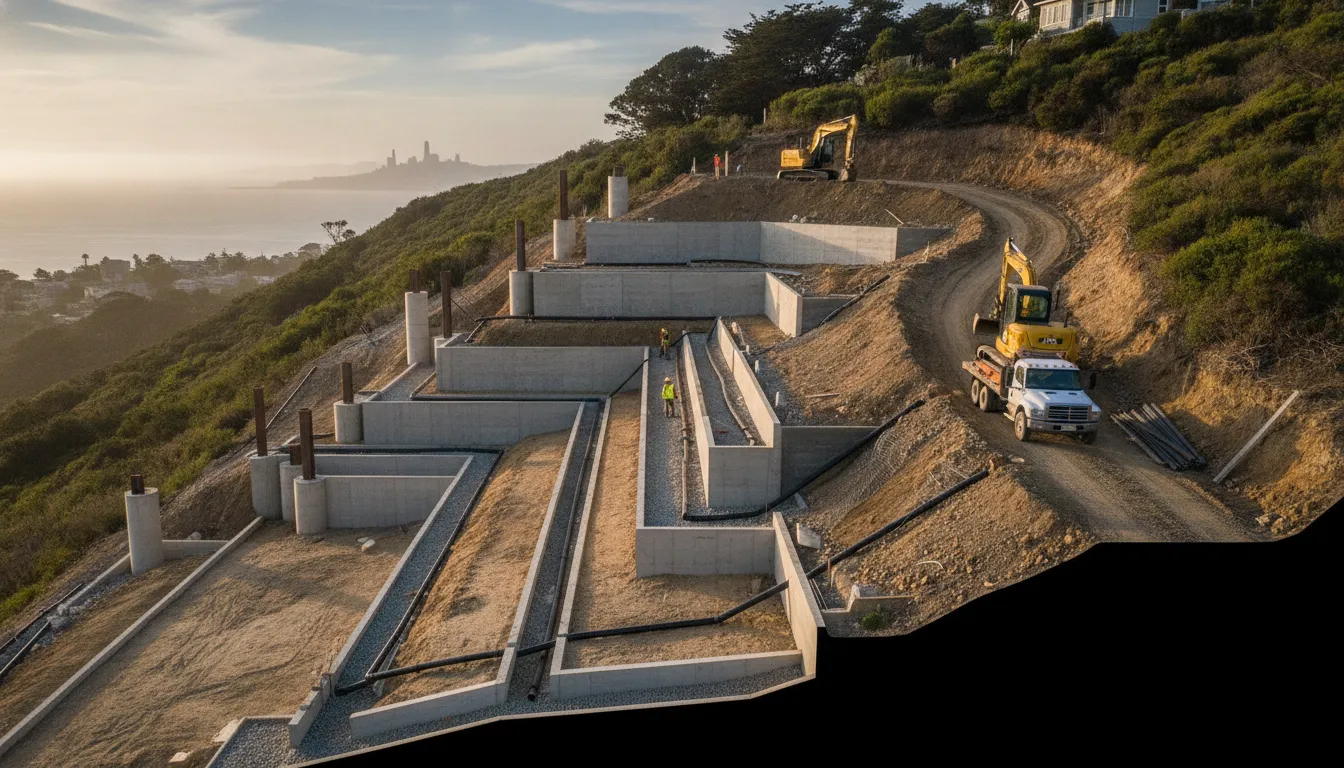
Every hillside home renovation Bay Area project starts with a close look at the bones of the house. These homes often face unique stresses that flat-site houses do not. You must find any weak spots in the frame or foundation before you start the main work. Small cracks or shifts can lead to big problems later if you ignore them now.
Check the home foundation and soil
The ground under a hillside home is always moving in small ways. Soil stability is a top concern because it affects how well the house stays in place. You should get a report from a geotechnical expert to see if the soil can support new loads. If you find issues, you may need to add deep piers or fix hillside foundation drainage to keep the area dry.
Proper drainage helps prevent the soil from washing away during heavy Bay Area rains. Water that pools around the base of the home can weaken the concrete over time. Fixing these issues early saves money and keeps the structure safe for years. It also ensures your new rooms have a solid base that will not sink or tilt.
Review seismic safety and lateral loads
Hillside homes are at higher risk during a large earthquake. These houses often have structural gaps that can lead to failure during a quake. This was seen during the 1994 Northridge quake, where many hillside homes sustained heavy damage according to research from berkeley.edu. You must check how the house handles side-to-side forces, also known as lateral loads.
A good plan should include seismic safety for hillside homes to strengthen these weak points. This often means adding steel bolts or plywood shear walls to the lower levels. These steps help the house stay on its foundation when the ground shakes. Most local building codes in the Bay Area now require these updates for any major remodel.
Assess existing framing and load paths
The way weight moves through your home is its load path. On a hill, these paths can be complex and may require structural planning for hillside renovations if you want to move walls. Old framing might not meet modern rules for strength or fire safety. You need to know which walls hold up the roof and floors before you change any part of the layout.
Experts check the wood for rot or pest damage that could hide behind the drywall. They also look at how the beams connect to the posts and foundation. Strong connections ensure the whole house acts as one unit during a storm or quake. Checking these items first gives you a clear path for the rest of your home project.
Drainage and retaining walls are part of the remodel
Direct answer: Drainage and retaining walls must be planned together because water pressure can weaken soil and overload a retaining system. A complete hillside plan manages roof runoff, surface flow, and subsurface water, then directs it to an approved discharge point without creating erosion or transferring problems to neighboring property.
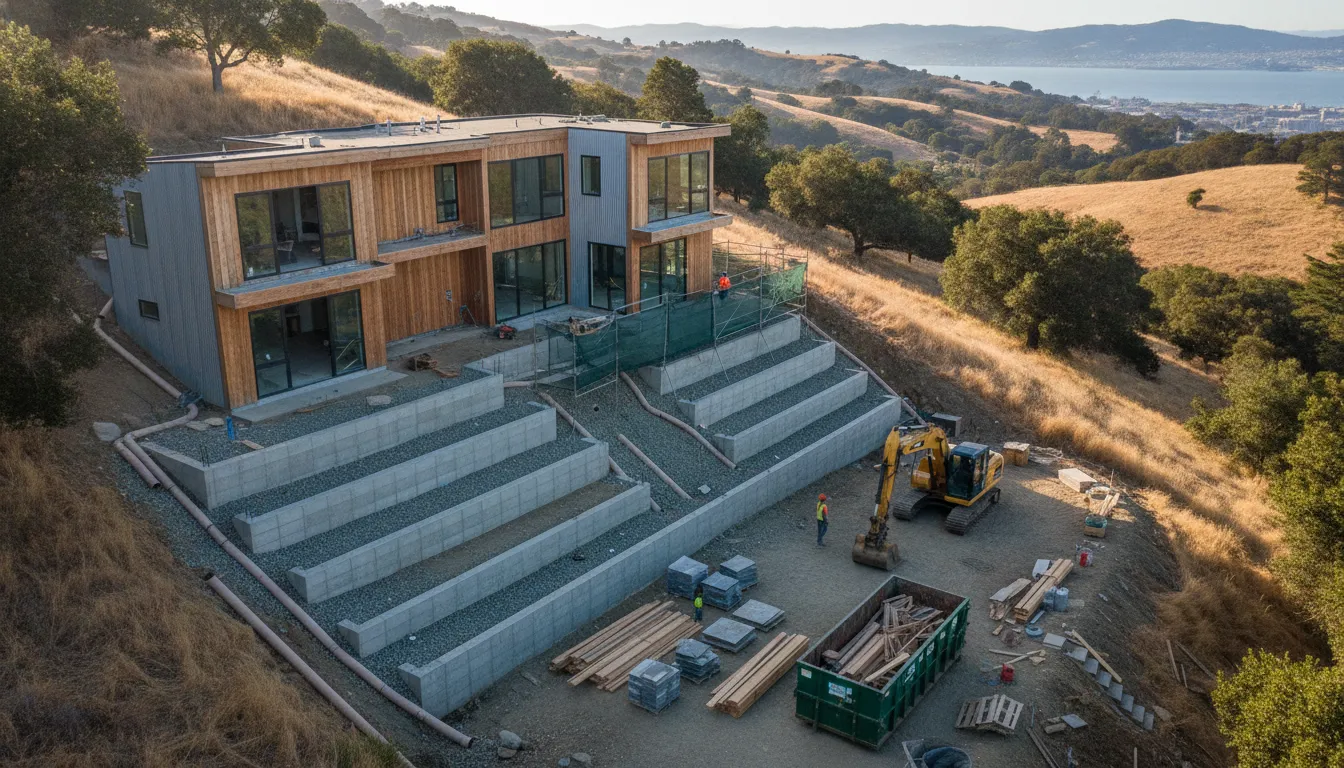
Water is the biggest threat to any hillside home renovation Bay Area. Proper systems keep your home safe and dry during heavy rain. When you start a remodel, you must look at how water moves across your land. Golden Heights Remodeling evaluates both surface and subsurface water to help prevent damage to the new space. Hillside sites need a plan that handles large amounts of runoff without washing away the soil.
Managing water on a slope
Surface drainage uses gutters to move water away from your home along sloped paths. Subsurface drainage is even more vital for steep lots. This often includes French drains or solid pipes buried in the soil. These systems catch water that soaks into the ground before it can reach your foundation. In the Bay Area, rain can be heavy and sudden, so these pipes must be the right size to handle the flow.
Without the right hillside foundation drainage, water can build up behind walls. This creates water pressure that can crack concrete or cause soil to shift. We plan these systems early in the design phase to make sure they work with your new landscape. We also look at how water from nearby yards might affect your site. This full view helps us stop problems before they start.
The role of retaining walls
Retaining walls do more than just hold back dirt. They create flat spots for your yard and protect your home from erosion. In the Bay Area, these walls must be strong enough to handle both the weight of the soil and likely earthquakes. The 1994 Northridge earthquake showed how hillside structures are at risk if they are not built to high standards. We use reinforced steel and deep footings to ensure your walls stay in place.
Every wall we build includes built-in drainage. This often means a layer of gravel and weep holes that let water escape. We also use high-quality waterproofing on the back of the wall. This stops moisture from seeping through the stone or concrete. Keeping the wall dry helps it last longer and prevents salt stains from forming on the front. You can choose from many styles, like poured concrete or stone blocks, to match your home’s look.
Why drainage comes first
You should always finish your drainage and retaining work before you start on the house finishes. This prevents mud and water from ruining new floors or walls during a storm. A professional geotechnical report is the first step to find out what your site needs. This report tells us about the soil type and how deep the bedrock is. It is a key part of the permit process for any hillside project.
Proper planning helps you avoid costly fixes later. By setting up the right pipes and walls now, you protect the value of your renovation. We handle all the permits and site checks for these systems so you don’t have to worry. Our team works with engineers to make sure every part of your site is stable and dry. This solid base gives you peace of mind as you move forward with your dream home remodel.
| Common Issue | Warning Sign | Planning Response |
|---|---|---|
| Soil Erosion | Small gullies in the yard after rain | Install ground cover and stone swales |
| Water Pressure | Water stains or dampness on lower walls | Add French drains and clean gravel backfill |
| Wall Failure | Leaning, bulging, or cracking masonry | Build new reinforced retaining walls |
| Poor Surface Runoff | Puddles forming near the foundation | Regrade soil and install larger downspouts |
| Subsurface Seepage | Spongy grass or mud on a dry day | Install a network of perforated drain pipes |
How does hillside access change construction?
Direct answer: Limited hillside access affects equipment selection, material deliveries, labor time, debris removal, and emergency planning. The contractor must map staging and travel routes before work begins, then sequence excavation, foundation, drainage, and framing so crews do not block access or damage completed work.
Working on a slope changes more than just the view. In a hillside home renovation Bay Area, how workers get to the site is a major factor. Limited access for trucks and tools often sets the pace and price of the project. If a heavy truck cannot reach the front door, every piece of wood and bag of cement must be moved by hand or with small lifts.
Managing tight staging areas
Flat lots offer plenty of space to park trucks and stack wood. Hillside sites usually lack this room. We often have to store items far from the actual work zone. This leads to more labor hours just for moving things back and forth. Careful structural planning for hillside renovations is needed to ensure we do not block paths during the early phases of the build.
Trash removal is also harder on a steep hill. We cannot simply drop a large bin on a narrow, winding road. We often use smaller bins and swap them out more often. This keeps the site clean but adds to the logistics budget. Without a clear plan, trash can pile up and slow down every team on the site.
Equipment and delivery limits
Large cranes or cement mixers might not fit on tight hillside streets. This often means we use smaller tools that take more time to finish the job. For example, we might need a small pump for concrete instead of a large truck with a boom. These choices help protect the local roads but need a tight plan to avoid delays.
Neighbor impacts are a real concern in these areas. Narrow roads mean we must plan deliveries to keep cars moving. We often work with local cities to manage the permitting process for hillside construction and ensure our trucks do not block emergency routes. Staying on good terms with your neighbors is part of a smooth build.
Safety and work order on a slope
The order of work is different when space is tight. We might finish certain structural steps early just to create a stable spot for tools. Because hillside sites can move, keeping up seismic safety for hillside homes is a priority from day one. Good timing prevents the site from becoming too crowded or unsafe during the deep digging phase.
Firm planning helps avoid the high costs of structural failure. Past studies at UC Berkeley show that hillside homes face unique risks during seismic events. By managing access and staging correctly, we ensure that safety features and drainage systems go in exactly when they are needed most.
Which permits and reviews may be required?
Direct answer: A Bay Area hillside remodel may require building, grading, drainage, planning, and design reviews, plus supporting geotechnical and structural documents. Requirements differ by city and lot, so confirm the permit path with the local agency before completing design or committing to a construction schedule.
Getting a permit for a hillside home renovation Bay Area is a big task. Building on a flat lot is much simpler. Local cities have strict rules to keep homes safe on steep land. You must follow many safety and land laws. These rules help stop mudslides and keep the hill steady during a storm.
Most cities look at your plans with extra care. They want to see how you will handle water flow and slope safety. You will need to show that your new build will not hurt the soil or nearby homes. Often, this stage takes longer than a normal update. It is common for towns to have a special board that checks any work on a slope.
Why you need expert reports
A key part of the process is the geotechnical report. This report looks at your soil and how well the hill can hold weight. A pro will test the ground for risks like shifting dirt or soft spots. This step is a key permitting process for hillside construction and is a top rule for most cities.
You will also need full structural plans. These plans show how your home will stand up during a big earthquake. Hillside homes have unique weak spots that need extra support. Studies from UC Berkeley show that these homes need very strong frames to stay safe. If your home is old, you might need to add new steel or concrete to meet current codes.
Common files you may need include:
- A site survey that shows the exact slope of your land.
- A soil report from a licensed engineer.
- Drainage plans to keep water away from the foundation.
- Plans for any walls that hold back the hill.
Meetings with city planners
It is smart to talk to your city planning office before you start. They can tell you which reviews you need before you spend a lot of money. You might need a design review to make sure the house fits the area. Some towns also have rules about how much of a view you can block. Talking early helps you avoid big changes later in the game.
These meetings are a great time to ask about grading permits. Grading is when you move dirt to make the land flat or safe. In the Bay Area, moving even a small amount of soil on a hill can trigger a full review. You should also check for any nature laws that protect local trees or water.
Golden Heights Remodeling manages the full permit path for you. We work with city staff to make sure your plans meet every local code. Our team handles the back and forth with the building office. This lets you focus on the fun parts of your home project while we take care of the red tape. You can schedule a consultation to start your plan today.
A planning checklist before design begins
Direct answer: Before design begins, document the site’s slope, soil, drainage, structural condition, construction access, and likely permit reviews. Use those findings to set realistic scope, sequencing, contingency, and design goals before investing in detailed plans.
Planning a hillside home renovation Bay Area project is the first step to success. These jobs carry risks that flat lots do not face. Sloping sites need more than just good looks. They need deep skill in soil and building safety. By using a clear plan, you can avoid costly delays and keep your home safe for years. Golden Heights Remodeling offers full remodeling services to help you manage these first steps with ease. Proper planning is the only way to ensure your vision fits the reality of your lot.
Site Review and Soil Testing
The first step is to learn what lies below the dirt. Hillside sites often have tough soil that can shift over time or during a storm. You will need an expert geotechnical report to check the slope of your lot and its soil layers. This report tells your team how to build the foundation so it stays firm. Most local cities in the Bay Area require this report before they will grant any permits. Without this data, you risk building failure or land slides that could ruin your home. It is the most vital part of the planning phase.
Seismic Safety and Engineering
Bay Area homes must stand up to earthquakes, but hillside houses face extra stress. These homes often have gaps in their frames that can lead to failure during a quake. Research shows that seismic safety spending is often tied to home value and local growth. To keep your family safe, your plan should include extra steel and concrete to tie the house to the hill. Your engineer may call for shear walls or special bracing to stop the house from shifting. This work makes the building much stronger and helps it meet strict local codes.
Drainage and Grading Plans
Water is the biggest threat to a sloped property. Bad runoff can wash away soil or cause the ground to move. You must have a site plan for hillside foundation drainage to move water away from your home. This plan should look at how water flows from the roof, the yard, and the hill above you. You may need to build retaining walls to hold back the slope and guide water to the street. Good grading helps protect your foundation and keeps the land around your home stable during heavy rains.
- Conduct a site check. This initial check helps you find major issues with the land or local rules before you spend money on a full design.
- Order a geotechnical soil report. An expert will drill into the hill to check soil types and find the best depth for your new foundation piers.
- Set building and design goals. Decide what you want to achieve with the space and work with an engineer to see if the slope can support those ideas.
- Create a site drainage plan. Map out where water will go using pipes, drains, and walls to stop soil from washing away.
- Find the permit path. Talk to local officials to learn about nature rules and safety codes that apply to your specific hillside lot.
- Set an extra budget. Hillside work can uncover hidden rocks or soil issues, so keep 15% of your funds ready for new costs.
Frequently Asked Questions
What is the typical cost per square foot for hillside construction in the Bay Area?
Building on a slope is more complex than building on flat land. According to the California Residential Mitigation Program, construction costs for hillside homes in the Bay Area average between $500 and $600 per square foot. This price usually covers the house itself but does not include the cost of the land. The final price depends on the steepness of the site and the need for specialized foundation work.
Why are hillside home retrofits important for earthquake safety?
Hillside houses often have structural weak spots that can lead to major failure during a quake. These homes face unique risks from side-to-side forces that differ from flat-site houses. Research from UC Berkeley shows that many older hillside homes sustained heavy damage in past seismic events. A retrofit ties the home more tightly to its base, helping it stay on the foundation when the ground moves.
Do hillside property renovations require special permits in the Bay Area?
Yes, renovating a home on a hill involves a more rigorous permitting process than a standard remodel. Local cities enforce strict safety and environmental rules to prevent mudslides and protect soil stability. You must typically provide a geotechnical report and detailed drainage plans before the city will approve your work. Most Bay Area towns also require a design review to ensure the project meets local standards for slope safety and neighborhood impact.
How much does it cost to build or renovate a hillside home in the Bay Area?
The total cost for a hillside project varies widely based on the terrain and access. While the house frame may cost about $500 to $600 per square foot, you must also budget for retaining walls and drainage systems. These features are vital for keeping the hill stable and dry. Since every site is different, working with a design-build firm helps you manage these costs and ensures all technical steps meet the high standards needed for steep land.
Are you ready to secure your Bay Area hillside home?
Small cracks in your foundation or poor yard drainage on a steep slope can lead to high repair costs if you wait too long. If you do not fix these issues now, you may face much higher risks to your home and family when the next big storm hits. Starting now gives you the time you need to request hillside foundation drainage plans and get your permits done before the winter rains arrive.
Ready to schedule a consultation? You can book your hillside inspection today to talk to a local building pro about your plans. Our expert team will help you keep your home safe, strong, and stable for many years to come.
Ready to talk about your kitchen?
Get a free, no-pressure design consultation. We'll walk through your goals, budget, and the upgrades with the best return for your home.