
Plan your shared spaces around daily routines.
Schedule a free design consultation with Golden Heights Remodeling
Three adults sharing one Bay Area address should not mean giving up privacy. A thoughtful remodel can create quiet retreats, safer access, and welcoming spaces where family still gathers with ease.
A multigenerational home remodel reorganizes a house so parents, adult children, or extended family can live together while keeping daily independence and meaningful connection. In the Bay Area, smart planning often combines private sleeping zones, nearby bathrooms, sound control, accessible routes, shared gathering space, and useful storage for each household. These choices help separate sleep, work calls, guests, and caregiving from meals and time together without constant friction. The CDC identifies safety as central to older adults’ mobility and aging-in-place decisions, so future access deserves early attention. The right plan may rework the main house, add rooms, convert existing space, or include an ADU when greater separation fits the family.
The real planning question is not simply where another bedroom fits, but how every household cooks, rests, enters, works, hosts, and helps one another. Multigenerational home remodel planning starts with daily routines, because those patterns reveal which boundaries and shared moments the design must support. Here’s how.
Multigenerational home remodel planning starts with daily routines
The best starting point for a multigenerational home remodel is not a room list. It is a map of daily life. Before drawing walls, record how each person sleeps, cooks, works, rests, gathers, and moves through the home. For Bay Area households, this step turns different needs into clear layout choices.
Privacy and daily connection
Start by naming who needs quiet, who wants family nearby, and who keeps a different schedule. An older parent may want a private sitting area near shared spaces. An adult child working late may need sound separation from bedrooms. A teen may need a study spot that does not take over the kitchen table.
Then note when routines cross. Do several people prepare breakfast at once? Will guests stay for weekends or longer visits? Does one household eat early while another arrives home late? These answers guide decisions about shared meals, bedroom placement, bathroom access, and small retreat spaces.
Care, access, and changing needs
Caregiving works best when support is close without removing privacy. Ask whether a family member needs help at night, near access to a bathroom, or an easy route to common rooms. Safety can shape mobility choices for older adults, according to CDC-supported research on aging in place. Planning for movement now can make later changes less disruptive.
Walk through a normal day and look for pinch points. Consider steps, narrow routes, slippery entry points, crowded halls, and doors that are hard to use with groceries or a walker. A layout can support independence while keeping relatives near when help is needed.
Questions to answer before a layout is drawn
A planning conversation should cover the way the household lives today and how it may change. These questions help families prepare for design and planning services without choosing a fixed floor plan too soon:
- Who needs a private bedroom, bath, work area, or entry?
- Who needs to be close to children, older relatives, or shared living rooms?
- Which routines create noise, traffic, or kitchen and bathroom overlap?
- How often do overnight guests visit, and where should they stay?
- Which stairs, thresholds, or tight paths could be harder to use later?
- Could a private zone serve guests today and a relative in the future?
Families may find that the right answer is a redesigned main home, a private suite, or another living zone. When a separate space fits the routine map, review options for designing an ADU for extended family. The aim is flexibility: shared time should feel easy, and private time should remain possible.
Which layout best balances independence and connection?
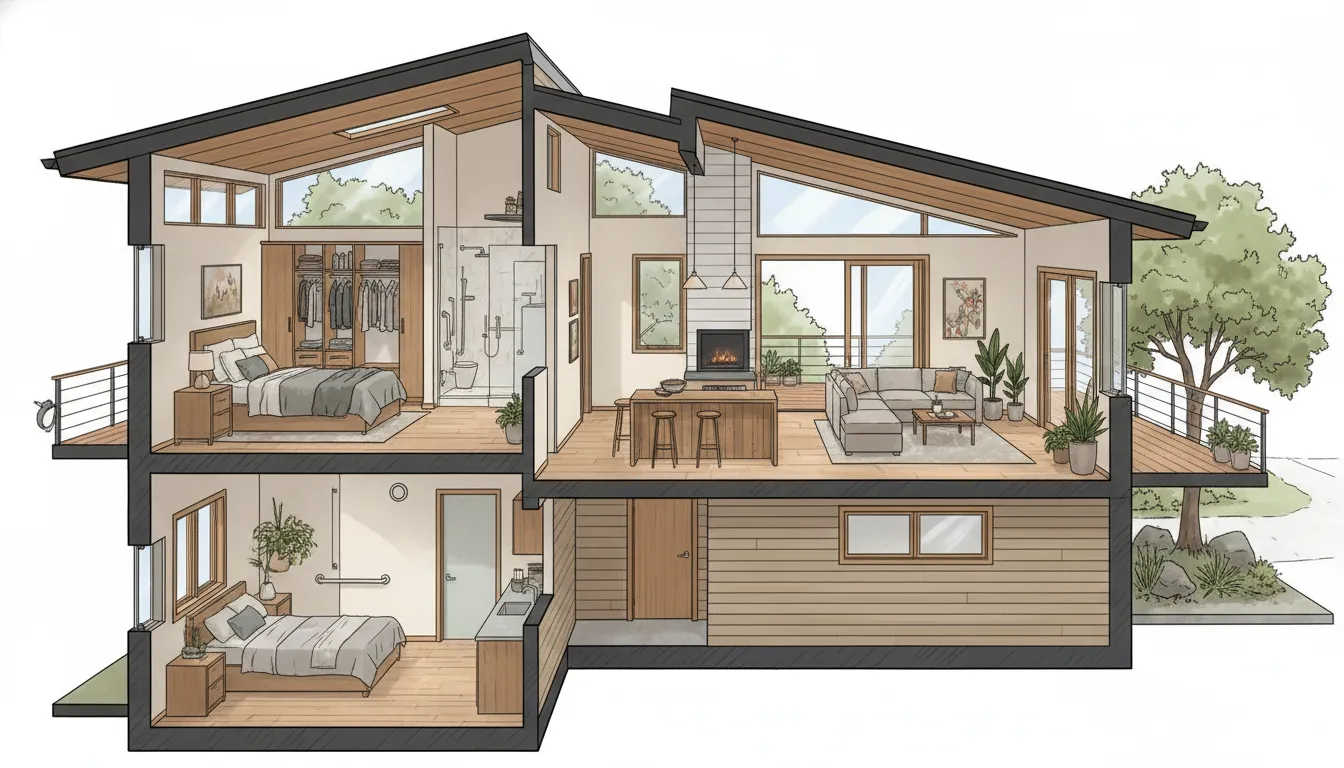
A multigenerational home remodel can keep family close while giving each generation room for daily routines. The best fit depends on privacy, shared time, future care, and how the household uses each entrance.
Three levels of separation
Reworking existing rooms suits households that value frequent contact and do not need a second dwelling. Through a full home remodel, families can define bedroom and bath zones while keeping common rooms easy to reach.
A room addition creates more separation without placing a loved one in a separate structure. It can hold a suite, sitting room, or flexible care space near the home’s main gathering areas.
The options below show three common layout paths.
| Layout option. | Best fit. | Privacy. |
|---|---|---|
| Existing home rework. | Families sharing routines. | Moderate. |
| Room addition. | A relative needing a suite. | Moderate to high. |
| ADU. | Separate household routines. | High. |
Compare access to shared rooms and daily privacy needs. For a main-home rework, focus on room zones and sound control. For an addition, consider suite location and its entry path. For an ADU, consider site layout and safe access.
A separate home nearby
An ADU may fit when family members need their own daily routines and household spaces. It stays nearby but makes boundaries for sleep, meals, work, and guests easier to manage.
This option can support connection by choice rather than by shared circulation. Family members can visit easily, while private living areas help each household set its own pace.
Privacy, safety, and long-term use
Privacy and access should be planned together. For an older adult, safe movement may shape whether a reworked floor plan, addition, or ADU works best. The CDC’s aging-in-place research identifies safety as a central factor in choices about mobility.
Before choosing a layout, list the rooms each household needs every day. Then map entrances, bathroom access, quiet areas, outdoor paths, and shared meals. These details help make private space useful without cutting off family contact.
For households considering a separate unit, the guide to designing an ADU for extended family explains that project path. Comparing needs first gives the design team a clear starting point for access and connection.
Design a private suite and accessible bathroom for changing needs
A restful room with privacy
A multigenerational home remodel should give an older parent a private room that also works for an overnight guest. Place it near a full bathroom when the floor plan allows. Keep the route short, simple, and free of tight turns.
Start with privacy, not just square footage. A door away from the busiest gathering space can reduce daily interruptions. Add a closet, drawers, and a small surface for personal items. If you are reworking a larger layout, planning a multigenerational home layout early helps connect private and shared zones.
Think about what the room needs on an ordinary week. A reading chair or small desk can make visits more comfortable without turning the room into a busy shared area. When no guest is present, the same area can serve quiet work or hobbies.
An easier bathroom route
For older parents and guests, bathroom planning starts with the path into the room. Consider a zero-step entry where the plan and build details support it. A low threshold may be a sound choice in other settings. Either approach should be reviewed during design, rather than assumed to meet every need.
Safety can shape how older adults make choices about mobility, as discussed in CDC research on aging in place. A practical bathroom plan may include a clear entry, a roomy turning area, and easy-to-reach controls. Use even lighting near the route, shower, vanity, and toilet area. Avoid relying on one ceiling light to serve the whole space.
Details that support daily use
A private suite should feel settled for a longer stay, yet easy to host when plans change. Keep towels, bedding, and bath supplies within the suite or near its door. Choose storage that is simple to reach without bending far or stretching above shoulder height.
- Allow open floor area beside key furniture, so a guest can move through the room with less obstruction.
- Plan lighting controls near the room entry and bedside area for a clearer nighttime route.
- Use doors and storage placement to screen the sleeping area from busy family rooms.
- Discuss shower entry, flooring, hardware, and future grab-bar backing during the design phase.
Some families need a bedroom suite inside the main home. Others may want a separate space for longer visits or more privacy. In those cases, designing an ADU for extended family offers a useful comparison point. It can help you set priorities for access, privacy, and shared time.
Plan shared kitchens, sound control, and storage that reduce friction
A kitchen with room to gather
In a multigenerational home remodel, the kitchen should make daily contact easy without turning cooking into a traffic problem. Begin with clear work lanes around food prep, cleanup, and the table. Place seating near the activity, not inside the main path between the refrigerator, sink, and cooking area.
An island or nearby table can give children and older adults a place to sit while meals are made. It also helps the cook stay part of the conversation. During planning a multigenerational home layout, map where groceries land, dishes dry, and people pass through at meal times.
Small support zones
A secondary beverage or prep area is a planning option, not a rule. In the right layout, a counter with storage and convenient access to drinks can reduce trips through the main kitchen. It may also let one person make coffee while another prepares breakfast or packs lunches.
Keep this support zone tied to real habits. Decide who uses it, at what time, and for which tasks before adding cabinets or plumbing. A location near a family room, guest suite, or patio can ease crowding without dividing the home.
Look at access as well as convenience. Wide paths and easy-to-reach shelves can make a shared snack or drink station simpler for different ages. Good lighting helps everyone use the area safely during busy mornings and evening gatherings.
Quiet space beside active rooms
Shared living works better when an early riser, remote worker, or sleeping child has a quieter place nearby. More household members can mean more noise. Busy spaces may need added sound control, as an academic design guide explains. Place louder rooms away from bedrooms and work areas when the footprint allows.
Walls, doors, and room placement all shape sound. A closed door between a television room and bedroom gives residents more choice than one open shared zone. Soft finishes, built-in shelving, and a buffer hall can help limit daily noise while keeping rooms connected.
Storage assigned to daily routines
Extra residents often bring coats, shoes, cookware, hobby supplies, mobility items, and family keepsakes. Give common items a clear home near their point of use. Consider pantry zones, drop areas near entries, linen storage near baths, and closed cabinets in shared rooms to keep walking paths clear.
Storage planning is also a chance to discuss privacy and household routines before drawings are final. If your household is balancing shared time with personal space, schedule a free initial consultation to review zones, storage, and quiet-room needs together.
How can a multigenerational renovation be phased?
Priorities before plans
A successful multigenerational home remodel starts with agreement on privacy, shared time, and daily support. Before plans take shape, list needs such as quiet bedrooms, clear paths, shared spaces, and easy-to-use bathrooms. This first discussion keeps one person’s preferred feature from hiding another person’s daily need.
Safety deserves its own line in the brief. The CDC reports that safety can shape older adults’ mobility choices and their plans to age in place. That insight supports early talks about steps, lighting, entries, and bathroom use.
A phased decision path
Phasing works best when each choice prepares for the next one. Use the early concept plan to compare living zones and possible accessory space before picking finish details. If a separate suite fits your goals, review designing an ADU for extended family as you shape the full plan.
-
Define household priorities. Ask each adult what must stay private and what can be shared. Note routines, guests, storage, remote work, mobility needs, and preferred gathering spaces.
-
Build one design roadmap. Map private zones, shared rooms, entries, baths, noise control, and safe paths together. A unified drawing helps the family choose core work before small upgrades compete for attention.
-
Complete high-impact core work first. Focus the main phase on spaces and systems that affect daily use across generations. Examples may include a usable bathroom layout, better room flow, or a private living area.
-
Hold flexible improvements for later. Choose features that can be added without undoing the core design. Built-in storage, finish updates, and flexible room details can wait until household patterns are clearer.
-
Walk through the finished phase. Confirm that routes feel clear, shared rooms serve the household, and private zones work as planned. Record later improvements in order, instead of reopening settled choices during active work.
Clear choices with less disruption
A phased plan can reduce the choices and work zones a household must manage at once. It does not mean planning only one room at a time. A full design roadmap keeps later choices aligned with the home’s long-term use.
Before each phase begins, confirm the rooms affected, who needs access, and which choices are final. This keeps family talks focused while the household adapts to the work. It also leaves later improvements flexible without losing the agreed plan.
When does an addition or ADU fit the household better?
A multigenerational home remodel can improve shared space, but it cannot always create the separation each household needs. Adults may have different sleep schedules or need quiet work time. When a closed door is not enough, added square footage may be the clearer fit.
Begin with daily life, not a floor plan. Ask who needs a private entrance, a bathroom nearby, room for guests, or easier outdoor access. These answers show whether a connected addition or a separate accessory dwelling unit (ADU) suits the household.
A connected room addition
A room addition may make sense when family members want privacy while staying part of the main home. It can support a bedroom suite, sitting area, or first-floor retreat near shared meals and routines. The connection can also make daily check-ins simpler for family caregivers.
This path fits households that still expect to share a kitchen, laundry, and most living areas. During early planning, review entries, bathroom access, sound control, and walking routes. The room additions service page can help frame that discussion with a design-build team.
A separate ADU
An ADU may fit better when the household needs a stronger boundary between daily routines. An adult child, parent, or long-term guest may value a separate entry and their own living area. The main home stays close, while each household has more personal space.
That separation may help a home adapt as family roles change over time. A household can compare detached, attached, or conversion layouts during design review. Golden Heights Remodeling’s ADU construction page describes this option for Bay Area homes.
Decisions to compare first
For older relatives, safety belongs near the top of the planning list. A CDC-hosted study found that safety shaped older adults’ choices about mobility and aging in place. Its findings support an early review of level entries, clear paths, lighting, and bathroom access. Read the aging in place safety research for context.
- Choose an addition when close connection and shared household systems remain priorities.
- Consider an ADU when private routines and separate access matter more each day.
- Map present needs and possible future changes before choosing either layout.
In the Bay Area, site conditions and local review steps can affect what is practical for one property. A design discussion should test privacy, access, and long-term use before a layout is selected. That keeps the choice focused on how the household plans to live.
Also consider how often family members will meet in shared rooms, and how often they need to step away. An addition keeps private rooms within the home’s daily flow. An ADU creates a clearer reset between visits, caregiving tasks, work, and rest.
What should you ask a remodeling team before design begins?
A multigenerational home remodel starts with clear questions, not finishes or fixtures. Before design begins, ask how the team will balance shared time, privacy, access, and future change. Bay Area homeowners may also want one team to guide planning, design, and construction. Golden Heights Remodeling uses a full-service design-build approach, with 3D design and project management throughout the work.
Scope and household needs
Begin by asking, “Who will use each space now. And what could change later?” Name each household member’s daily needs, quiet hours, parking needs, and preferred level of privacy. Ask whether the plan should include a private suite, room addition, reworked main floor, or separate ADU.
Then ask what is included in early planning. Will the team review rooms, storage, entries, baths, and utility needs before drawing options? If a separate unit is under review, read about designing an ADU for extended family before you choose the scope.
Layout options and visualization
Ask to see more than one layout approach. One option might favor a shared kitchen and family room. Another might create a quiet living zone with its own entry or bath. The key question is how daily routines will work in each plan.
Visualization can make those choices easier to discuss as a family. Ask what the 3D design will show, including paths, doors, storage, and room links. Also ask when you can review changes. Learn which choices must be set before permits or construction planning move ahead.
Access and long-term safety
Even when each household member is active today, ask which access needs should be planned from the start. Discuss step-free entries, wider paths, a main-level bedroom, bath clearances, and lights along common routes. These choices can avoid hard changes later if a parent or guest needs easier movement.
Safety should be part of the layout talk, not an upgrade discussed at the end. A CDC report on aging and mobility found that safety shaped older adults’ mobility decisions. Ask the remodeler to mark safety needs in the first plan. Your family can review them along with privacy and comfort.
Communication and construction sequence
Ask who manages the project and how often updates arrive. A long remodel affects more than the rooms under construction, since several generations may stay in the home. Request a clear contact, review schedule, decision log, and process for scope changes.
Finally, ask how the work will be phased while the home is occupied. Which rooms become unavailable first? How will dust, noise, entries, and bath access be managed? Before design meetings, review a guide to planning a multigenerational home layout with your household.
Frequently Asked Questions
How much does a multigenerational home remodel cost in the Bay Area?
Costs vary with the space selected, structural changes, utilities, finishes, permits, and access to the site. Published planning benchmarks from Block Renovation estimate finished basement suites at $60,000 to $90,000, and garage conversions at $40,000 to $100,000. Bay Area homeowners should price several layout options before selecting an addition, conversion, or detached living space.
Do I need permits for a multigenerational home remodel in the Bay Area?
Permit needs depend on the scope and the local jurisdiction. Work involving added living area, new plumbing, electrical service, structural changes, or a separate dwelling unit commonly requires review before construction. A planning team should confirm requirements early, since city or county review may affect layout, budget, and schedule. For a related overview, see this guide to Bay Area room addition permits.
How can a remodel provide privacy without separating the family?
Start with private sleeping areas, separate or buffered bathrooms, and quiet zones away from busy gathering spaces. Shared kitchens, dining areas, patios, or family rooms can still support daily connection. Sound control matters when several adults follow different schedules. The Rocky Mountain College of Art and Design recommends added soundproofing in high-traffic areas of a multigenerational home.
What accessibility features should a multigenerational home remodel include for aging parents?
Plan for a step-free entry where feasible, wider travel paths, a first-floor bedroom, good lighting, lever handles, and a bathroom with room for safer movement. Additions such as a curbless shower and blocking for future grab bars can support changing mobility needs. The CDC identifies safety as a central factor in older adults’ mobility and ability to age in place.
Ready to plan a home that works for every generation?
Waiting to plan can leave your household juggling tight layouts, limited privacy, and daily routines that become harder as family needs change. Early planning gives your family time to compare layout priorities, set a workable scope, and address key decisions before construction begins. Starting now creates a clear path toward private retreats and shared spaces that support parents, adult children, and extended family.
Ready to map out a comfortable home for every generation under one roof? Schedule your consultation to plan a multigenerational remodel with Golden Heights Remodeling and start making confident design decisions now. Bring your goals, questions, preferred timeline, privacy needs, and shared space priorities to an initial planning conversation.
Ready to talk about your kitchen?
Get a free, no-pressure design consultation. We'll walk through your goals, budget, and the upgrades with the best return for your home.